Radial vs Focused Shockwave Therapy: What Is the Difference?
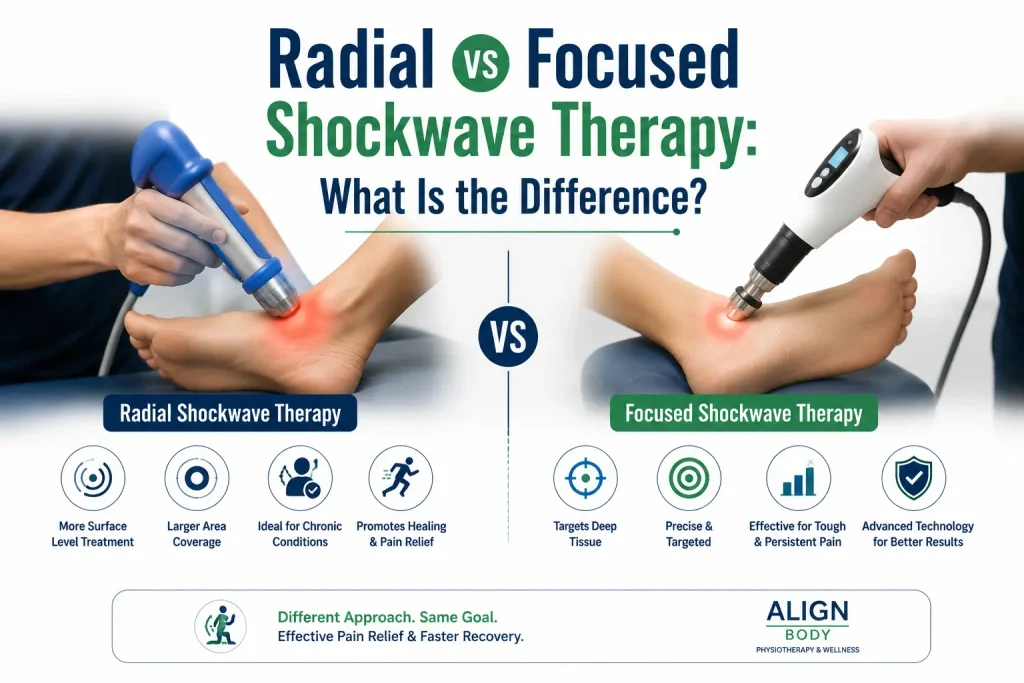
Radial shockwave therapy disperses energy in a cone shape from the probe tip and is most effective for surface and superficial musculoskeletal conditions. Focused shockwave therapy concentrates energy at a precise focal point deeper in the tissue and is better for deeper structures, calcific deposits and bone-level pathologies. For most common physiotherapy conditions like plantar fasciitis, Achilles tendinopathy and patellar tendinopathy, radial shockwave produces excellent clinical results. Focused shockwave is preferred for calcific conditions and very deep tissue targets.
If you have been recommended shockwave therapy or are researching it as a treatment option, you may have come across both terms and wondered whether they are the same thing or different.
They are different technologies that produce similar but not identical effects. This guide explains the practical differences, which conditions each type is best suited for and what this means for your treatment.
How Radial Shockwave Works
In radial shockwave (also called ballistic shockwave or RSWT), a projectile is accelerated pneumatically and strikes a probe tip, generating pressure waves that radiate outward from the contact point in a cone-like pattern. The energy is highest at the skin surface and disperses as it penetrates deeper into the tissue.
Radial shockwave treats a broader volume of tissue simultaneously. It is excellent for superficial to mid-depth structures in the range of one to five centimetres from the skin surface. Most of the tendons and fascial structures commonly treated with shockwave therapy fall within this range.
How Focused Shockwave Works
Focused shockwave (FSWT) uses electromagnetic, piezoelectric or electrohydraulic technology to generate high-pressure waves that are acoustically focused to a precise focal point at a set depth within the tissue. The energy concentration at the focal point is much higher than with radial shockwave.
Focused shockwave can target tissue at depths ranging from one to twelve centimetres with precise energy delivery to a small volume. It is particularly effective for conditions involving deep structures, calcific deposits and bone stress reactions.
Practical Differences for Common Conditions
| Condition | Best Shockwave Type | Reason |
|---|---|---|
| Plantar fasciitis | Radial or focused | Plantar fascia is superficial. Both effective. Focused preferred for calcific cases |
| Achilles tendinopathy (mid-portion) | Radial | Achilles is superficial and benefits from broad energy delivery |
| Patellar tendinopathy | Radial | Patellar tendon is a superficial structure accessible with radial shockwave |
| Calcific shoulder tendinopathy | Focused | Calcific deposits benefit from the higher energy concentration of focused shockwave |
| Greater trochanteric bursitis | Focused | Deep structure in large patients may require focused delivery |
| Tibial stress reactions | Focused | Bone-level pathology benefits from focused energy delivery to the periosteum |
Which Is More Effective: Radial or Focused?
Neither is universally superior. The effectiveness depends on matching the technology to the condition and depth of the target tissue.
For the majority of tendinopathy conditions treated in physiotherapy practice, radial shockwave produces excellent outcomes and has a larger evidence base simply because it has been in clinical use longer and in more clinics. Multiple randomised controlled trials support radial shockwave for plantar fasciitis, Achilles tendinopathy and patellar tendinopathy.
Focused shockwave has a clear advantage for conditions requiring precise deep energy delivery: calcific tendinopathy, deep hip conditions and bone pathology.
Does It Matter Which Type You Receive?
For most patients with common tendinopathy conditions, the specific type of shockwave matters less than receiving the correct number of sessions, the correct energy settings and the correct probe placement combined with an appropriate loading programme.
A well-applied radial shockwave protocol for plantar fasciitis will outperform a poorly applied focused shockwave protocol for the same condition. The clinical expertise of the physiotherapist applying the treatment matters more than the specific machine type for most everyday conditions.
Shockwave Therapy at AlignBody, Delhi
At AlignBody, our shockwave therapy protocols are based on the current evidence for each condition. The type of shockwave used is selected based on your specific condition, the depth of the target tissue and your treatment history. Every patient receives a full assessment before shockwave therapy begins to confirm the correct diagnosis and treatment approach.
Book Shockwave Therapy at AlignBody, Delhi, East Delhi: Jagriti Enclave | South Delhi: Vasant Vihar | +91 9310 014 226