How Cupping Therapy Works and Why The Dark Marks Are Not Bruises
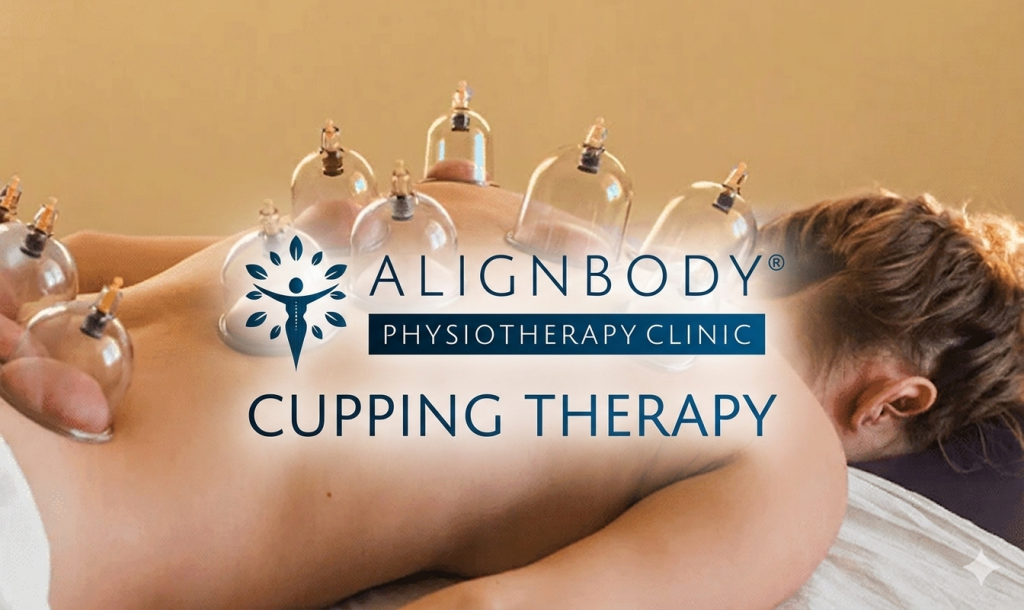
Cupping Therapy Basics Every Patient Should Know
Cupping therapy is one of the oldest documented therapeutic practices in the world, with roots in ancient Chinese, Egyptian, and Middle Eastern medicine. The earliest recorded use dates back over 3,500 years. Today, it has found a well-deserved place in modern physiotherapy clinics because the underlying mechanism is genuinely effective when applied correctly.
At its core, cupping therapy creates a localised negative pressure – or suction – on the skin and underlying tissue.
The cups, which can be made from silicone, glass, or bamboo, are placed on the skin and the air inside is removed either by heat (fire cupping) or a mechanical pump (vacuum cupping).At AlignBody Physiotherapy Clinic in Delhi, we primarily use vacuum and silicone cupping for precision and safety – especially for patients who are new to the therapy. We also offer hijama (wet cupping) for specific conditions under appropriate clinical protocols. Visit AlignBody, best for cupping therapy in Delhi.
The Science Behind How Cupping Therapy Works
1. Myofascial Decompression
Your muscles are wrapped in a connective tissue called fascia. When you sit for long hours at a desk, carry chronic stress, or sustain a sports injury, this fascia can become tight, adhered, or restricted – leading to chronic pain, limited mobility, and a persistent ache that does not resolve with rest alone.
Cupping creates space between the skin, fascia, and muscle by lifting them apart. This process, called myofascial decompression, stretches the fascial tissue from the inside out – something no external massage technique can fully replicate. This is particularly important for Delhi’s working population, where prolonged sitting and forward-head posture are epidemic.
2. Increased Local Circulation
The negative pressure created by the cup stimulates blood flow to the treated area. Fresh, oxygenated blood rushes in to fill the low-pressure zone, bringing nutrients and accelerating the removal of metabolic waste products like lactic acid and inflammatory cytokines that accumulate in tight, hypoxic muscle tissue.
This is the same biological principle behind why physiotherapy exercises work: increased circulation equals faster healing. Cupping achieves this passively, making it particularly useful for patients who cannot actively exercise due to severe pain. Pilates therapy classes in Delhi are designed to rebuild core strength.
3. Activation of the Parasympathetic Nervous System
There is a strong neurological component to cupping therapy that is often overlooked in popular articles. The suction sensation triggers a nervous system response that shifts the body from a sympathetic (fight-or-flight) state to a parasympathetic (rest-and-heal) state. For patients dealing with stress-related muscle tension – extremely common in Delhi NCR’s working population – this neurological shift alone produces significant and immediate relief.
4. Stimulation of Lymphatic Drainage
Cupping also promotes lymphatic circulation, which is responsible for clearing cellular waste, excess fluid, and immune byproducts from the tissue. This is particularly beneficial for patients with chronic inflammation, post-surgical swelling, or recurrent soft tissue injuries that have not fully healed despite rest. Experience smarter recovery and expert care at a modern physiotherapy clinic in South Delhi.
Why Cupping Marks Are Not Bruises
A bruise (ecchymosis) occurs when a blunt impact ruptures small blood vessels (capillaries), causing blood to leak into the surrounding tissue. A bruise forms because of physical damage. It is painful to the touch, forms immediately after trauma, and typically turns yellow-green as it heals because the body is metabolising leaked blood.
| Feature | Bruise (Injury) | Cupping Mark (Therapeutic) |
|---|---|---|
| Cause | Physical impact / blunt trauma | Suction drawing stagnant fluid upward |
| Pain on touch? | Yes – tender and painful | No – typically painless or very mild |
| Colour range | Purple-black to yellow-green | Light pink to dark purple-red |
| What it indicates | Tissue damage and internal bleeding | Degree of toxin stagnation in tissue |
| Duration | 7 to 14 days | 3 to 10 days |
| Healing pathway | Haemoglobin breakdown (bilirubin) | Lymphatic clearance of interstitial fluid |
| Should you worry? | Monitor severity | No – normal therapeutic response |
Types of Cupping Therapy
- Dry Cupping Therapy:
The most common form used in physiotherapy. Cups are applied via a vacuum pump with no incisions. Used for muscle tightness, back pain, neck pain, and relaxation. Safe and suitable for first-time patients. - Wet Cupping (Hijama Therapy):
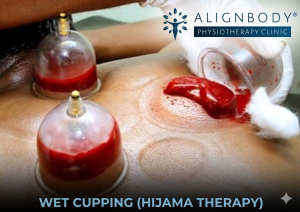
Involves small superficial incisions before cupping to draw out a small amount of blood along with metabolic waste. Used in specific Ayurvedic and Islamic medical traditions. Requires strict sterility protocols. - Sliding Cupping Therapy (Dynamic Cupping):
Cups are moved across oiled skin rather than remaining static. Works like a reverse deep-tissue massage. Excellent for the thoracic spine, IT band, and large muscle groups. - Flash Cupping Therapy:
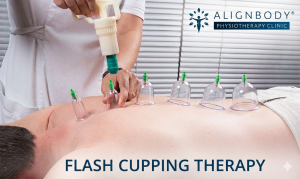
Cups are rapidly applied and removed repeatedly. Used to stimulate circulation in areas with poor blood flow, such as the upper trapezius and posterior neck. - Silicone Cupping Therapy:
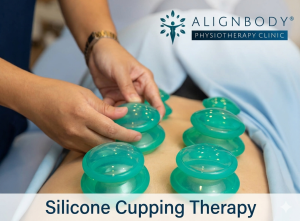
Flexible cups squeezed by hand. Best for delicate areas and patients with sensitive skin. Also used in facial cupping protocols.
Cupping Therapy Respond Well to Which Pain?
In clinical practice, the following conditions show consistent, measurable improvement with cupping therapy as part of a structured physiotherapy protocol:
| Condition | How Cupping Helps |
|---|---|
| Chronic back pain | Releases myofascial adhesions, improves spinal mobility |
| Cervical spondylosis/neck pain | Decompresses posterior cervical fascia, reduces referred pain |
| Sciatica | Reduces piriformis spasm and lumbar fascia tension |
| Sports injuries (muscle strain) | Accelerates healing, reduces inflammation and tightness |
| Migraine and tension headache | Releases suboccipital and upper trapezius tension |
| Stress-related muscle tightness | Activates parasympathetic response, deep relaxation |
| Post-surgical rehabilitation | Improves scar tissue mobility and peripheral circulation |
Cupping Therapy vs Other Physiotherapy Treatments
| Treatment | Mechanism | Best For |
|---|---|---|
| Cupping therapy | Myofascial decompression, negative pressure | Chronic tension, deep fascia restrictions |
| Dry needling | Trigger point release via fine needles | Muscle knots, referred pain patterns |
| IASTM therapy | Instrument-assisted soft tissue work | Scar tissue, tendinopathy |
| Shockwave therapy | Acoustic waves to break calcifications | Plantar fasciitis, calcific tendinitis |
| Manual therapy/massage | Compressive soft tissue work | Surface tension, relaxation |
FAQ’s About Cupping Therapy
Q1. What is cupping therapy and how does it work?
Cupping therapy is a physiotherapy treatment that uses suction cups placed on the skin to create negative pressure. This lifts the skin and underlying fascia, improves blood circulation, releases myofascial tension, and promotes lymphatic drainage. It treats chronic pain, muscle tightness, sports injuries, and stress-related conditions.
Q2. Are cupping therapy marks bruises?
No. Cupping marks are not bruises. A bruise forms from physical trauma that ruptures blood vessels.
Q3. Is cupping therapy painful?
Most patients describe cupping as a firm pulling sensation, not pain. The suction can feel unusual at first, especially in areas with tight fascia, but the majority of patients find the experience deeply relaxing.
Q4. How long do cupping therapy marks last?
Cupping marks typically last 3 to 10 days, depending on the degree of tissue stagnation and the individual’s circulation. With regular therapy sessions, marks tend to become progressively lighter, which is a positive clinical indicator of improving tissue health.
Q5. What is the difference between dry cupping and wet cupping (hijama)?
Dry cupping uses suction cups on intact skin with no incisions – this is the standard physiotherapy approach. Wet cupping (hijama) involves small superficial skin incisions before applying the cup to draw out blood and metabolic waste.
Q6. Who should not have cupping therapy?
Cupping is not recommended for patients with active skin infections, open wounds, bleeding disorders, anticoagulant medication, active cancer in the treatment area, or severe varicose veins. It should be avoided over specific areas during pregnancy. Always disclose your full medical history before treatment.
Final Thoughts: Is Cupping Therapy Right for You
Cupping therapy is not a magic cure – nothing in physiotherapy is. But as part of a well-designed, evidence-guided treatment plan, it is one of the most powerful tools available for releasing deep fascial restrictions, accelerating recovery, and restoring the body’s natural capacity to heal.
The marks will appear. They will look dramatic. Your family may ask questions. But they will fade within a week, they will not hurt, and you will very likely feel better than you have in months.
If you are dealing with chronic back pain, cervical pain, sciatica, sports injuries, or persistent muscle tension in Delhi NCR, cupping therapy at AlignBody may be exactly what your body needs to start healing – without drugs, without surgery, and without prolonged waiting.