Physiotherapy vs Orthopedic Treatment
What Is Orthopaedic Treatment?
At AlignBody, Orthopaedic treatment focuses on diagnosing, preventing, and treating conditions of the bones, joints, muscles, ligaments, and tendons. An orthopaedic doctor (orthopedist) may treat these problems using medicines, injections, braces, minimally invasive procedures, or surgery, depending on severity. Orthopaedic treatment covers the diagnosis, management, and rehabilitation of conditions affecting the musculoskeletal system, which includes your bones, joints, muscles, ligaments, tendons, and nerves.
Modern orthopaedic treatment has advanced tremendously, with minimally invasive procedures, joint replacement surgeries, and regenerative therapies like PRP and stem cell treatment now offering faster recovery and better long-term outcomes than ever before.
Common orthopaedic treatment methods include:
- Clinical assessment, X‑ray, MRI, and blood tests for diagnosis.
- Medications such as painkillers, anti‑inflammatories, or disease‑modifying drugs for arthritis.
- Injections (steroid, viscosupplementation) for joint pain.
- Casts, braces, splints for fractures, ligament injuries, and spinal issues.
Physiotherapy vs Orthopedic Treatment: What’s the Difference?
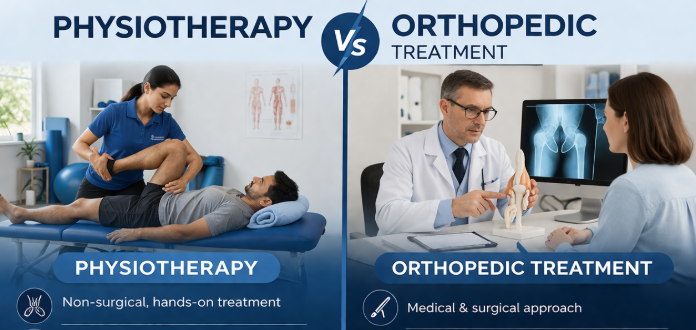
Orthopaedic treatment is a medical–surgical speciality, while physiotherapy is a non‑invasive rehabilitation and movement‑based therapy. Orthopedists correct structural or tissue damage; physiotherapists focus on restoring mobility, strength, and function, and preventing future injuries. Recover smarter and move better. Pilates therapy classes in Delhi are designed to rebuild core strength. Understand the difference between Physiotherapy vs Orthopedic Treatment with the below table-
| Aspect | Orthopedic Treatment | Physiotherapy Treatment |
| Primary Focus | Medical diagnosis and treatment of musculoskeletal conditions, including surgical management when required | Rehabilitation, improving mobility, restoring function, and managing pain through movement-based therapies |
| Typical Methods | Medications, injections, casts, braces, imaging-guided procedures, and surgery | Exercise therapy, manual therapy, electrotherapy, posture correction, and patient education |
| Best For | Bone fractures, severe arthritis, ligament tears requiring repair, structural deformities, and advanced spine problems | Muscle strains, chronic back or neck pain, post-surgery rehabilitation, balance issues, and mild to moderate joint problems |
| Invasiveness | May involve invasive or semi-invasive procedures such as injections or surgery | Non-invasive treatments focused on physical rehabilitation and hands-on techniques |
| Treatment Duration | Usually, shorter-term treatment focuses on diagnosis and immediate medical management | Often involves medium to long-term rehabilitation programs to restore strength, mobility, and function |
Benefits of Orthopaedic Treatment
Many of the patients are unable to walk properly, struggling with chronic pain, or unable to perform basic daily activities- and with the right orthopaedic care, they walk out of recovery with a completely transformed quality of life. Orthopaedic treatment does not just address the symptom; it targets the root cause of your pain.
1. Long-Lasting Pain Relief- Orthopaedic treatment targets the actual source of your pain- whether it is a damaged joint, compressed nerve, or inflamed tendon.
2. Improved Mobility and Flexibility- Conditions like arthritis, frozen shoulder, or knee injuries can severely restrict your movement.
3. Avoids Unnecessary Surgery — A good orthopaedic specialist always explores non-surgical treatments first — including physiotherapy, PRP injections, and bracing.
4. Supports Athletes and Active Individuals — Orthopaedic care is not just for older patients. It plays a critical role in sports medicine, helping athletes recover from injuries, prevent re-injury.
5. Boosts Mental Health and Confidence — Chronic pain and limited mobility deeply affect mental well-being. When patients regain their movement and become pain-free, the positive impact on their mood and confidence.
Conditions Treated by Physiotherapists vs Orthopedic Doctors
| Condition | Primarily treated by an orthopaedic doctor | Primarily treated by a physiotherapist |
| Fresh fracture | Yes, for diagnosis, stabilisation, and surgical treatment if required | No, physiotherapy usually begins after the bone has healed |
| Chronic low back pain | Sometimes, if serious underlying issues or surgery are required | Yes, through posture correction, strengthening, and mobility exercises |
| ACL tear | Yes, when surgical reconstruction is necessary | Yes, through pre-surgery conditioning and post-surgery rehabilitation |
| Early knee osteoarthritis | Sometimes, for diagnosis, medication, or injections | Yes, exercise therapy, strengthening, and lifestyle guidance |
| Joint replacement | Yes, performs the surgical procedure | Yes, provides pre-surgery conditioning and post-surgery rehabilitation |
People Also Ask-
1. When Should You Visit an Orthopaedic Doctor?
You should visit an orthopaedic doctor when there is suspected structural damage, severe pain, deformity, or failure of conservative care. Orthopaedic evaluation is crucial to rule out fractures, advanced arthritis, or serious spinal or joint problems.
2. When Should You See a Physiotherapist?
You should see a physiotherapist when pain, stiffness, or weakness affects your daily activities, but there is no obvious emergency. Physiotherapy is also key for rehabilitation after injuries or operations and for preventing recurrences. Experience smarter recovery and expert care at a modern physiotherapy clinic in South Delhi.
3. Can Physiotherapy Replace Orthopaedic Treatment?
Physiotherapy cannot completely replace orthopaedic treatment, but in many mild to moderate conditions, it can reduce or delay the need for surgery and medications. In severe structural problems, physiotherapy complements orthopaedic procedures instead of replacing them.
Role of Physiotherapy After Orthopedic Surgery
Physiotherapy after orthopaedic surgery is essential for restoring movement, reducing pain and swelling, strengthening muscles, and helping patients safely return to daily activities and sports. Research shows that early physiotherapy intervention leads to faster functional recovery and fewer complications.
- Pain and swelling control using modalities and gentle movement.
- Early mobilisation to prevent stiffness, clots, and muscle wasting.
- Progressive strengthening and gait training with or without aids.
Recovery Time: Physiotherapy vs Orthopedic Treatments
Recovery time depends on the type and severity of the condition, the procedure performed, and how consistently you follow your physiotherapy programme. In general, orthopaedic procedures address the underlying damage, while physiotherapy determines how quickly and how well you regain function.
- Muscle strain with physiotherapy: 2–6 weeks, depending on grade.
- Mild ligament sprain: 4–8 weeks with rehab.
- ACL reconstruction plus physiotherapy: 6–9 months for sports return.
- Total knee replacement with structured rehab: most daily activities in 6–12 weeks, further gains up to 1 year
FAQ’s About Physiotherapy vs Orthopedic Treatment
Q1. Which is better for chronic joint pain – physiotherapy or orthopaedic treatment?
They are complementary; physiotherapy improves mobility and strength, while orthopaedics manages diagnosis, medications, injections, and surgery when required.
Q2. How do I choose between an orthopaedic clinic and a physiotherapy centre near me?
For acute injuries, suspected fractures, or severe pain, choose an orthopaedic centre; for ongoing pain, mobility issues, or post‑op rehab, choose a reputable physiotherapy clinic.
Q3. Is physiotherapy safe for elderly patients with arthritis and osteoporosis?
Yes, when tailored by an experienced physiotherapist, exercises for arthritis and osteoporosis are safe and help reduce pain, maintain mobility, and lower fall risk.
Q4. Are home‑based physiotherapy exercises as effective as in‑clinic sessions?
Home exercises are vital, but supervised sessions ensure correct technique, progression, and use of specialised equipment.
Q5. Can I see an orthopaedic doctor even if I have already started physiotherapy?
Yes, if you are not improving as expected, your physiotherapist may advise an orthopaedic review to reassess the diagnosis and consider imaging or interventions.