Yoga vs Pilates: Know The Difference & Which Is Better for You
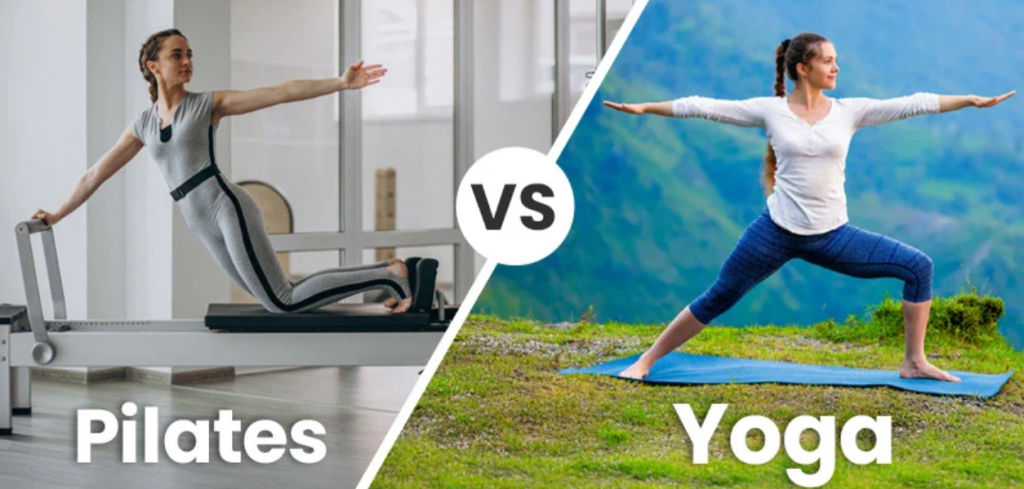
Yoga and Pilates are two of the most popular low-impact fitness practices in the world – but they are not the same, and choosing the wrong one can mean slower progress toward your health goals. Yoga is a 5,000-year-old mind-body practice rooted in Indian tradition that combines movement, breathwork, and meditation to improve flexibility, mental calm, and overall well-being. Pilates, developed in the 20th century by Joseph Pilates, is a precision
movement system focused on core strength, spinal alignment, and rehabilitation.
As a physiotherapist at AlignBody Clinic in Delhi, I, Dr. Richa Gupta – works with patients every day who ask: “Should I do yoga or Pilates for my back pain/weight loss/posture?” The honest answer is: it depends on your goal. This guide breaks down every key difference so you can make the right choice.
What Is Yoga? Definition, Origins & How It Works
Yoga is best defined as a structured, evidence-backed mind-body discipline that combines physical postures (asanas), controlled breathing (pranayama), and meditation to build strength, flexibility, and mental resilience. Originating in ancient India over 5,000 years ago, yoga has evolved into multiple modern styles – from gentle Hatha to high-intensity Ashtanga.
Yoga is an ancient mind–body practice from India that combines physical postures (asanas), breathing techniques (pranayama), and meditation to improve flexibility, strength, balance, and mental calm. Modern yoga classes typically include stretching, static and dynamic poses, breathing, cortisol regulation, lower blood pressure, improved flexibility, and mental health support, with a relaxation or short meditation at the end.
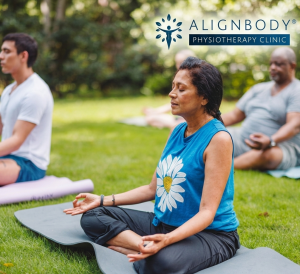
Regular yoga practice can improve joint mobility, reduce stress, support better sleep, and contribute to overall functional fitness. Many people also use yoga as a complementary therapy for chronic pain, anxiety, and lifestyle-related issues because it addresses both body and mind. As a physician, I frequently recommend yoga to patients managing chronic low back pain, generalised anxiety disorder, hypertension, and insomnia.
The parasympathetic activation triggered by slow, controlled breathing (4-7-8 breathing, diaphragmatic breathing) is physiologically measurable and clinically meaningful. Yoga is not merely an alternative therapy – it is a complementary modality with an ever-growing evidence base in peer-reviewed literature.
Major Yoga Styles Practised in India & Worldwide
1. Hatha Yoga — Best for beginners; slow-paced with basic postures and breath awareness. Ideal for stress relief and flexibility.
2. Ashtanga Yoga — A structured, fast-paced series of poses. Builds strength and stamina. Recommended for intermediate to advanced practitioners.
3. Bikram / Hot Yoga — 26 postures performed in a heated room (40°C). Good for detoxification and deep muscle stretching.
4. Vinyasa / Flow Yoga — Dynamic movement linked with breath. Popular for cardiovascular fitness and body toning.
5. Restorative / Yin Yoga — Passive, long-hold poses targeting deep connective tissue. Excellent for recovery, anxiety, and chronic pain management.
Proven Health Benefits of Yoga: Back Pain, Stress & More
Reduces chronic low back pain – Clinical studies show consistent yoga practice over 8–12 weeks significantly reduces lower back pain intensity and improvesfunctional mobility in adults.
Reduces anxiety and depression scores – Pranayama and slow yoga activate the parasympathetic nervous system, lowering cortisol and adrenaline levels. Diaphragmatic breathing (4-7-8 technique) produces physiologically measurable stress reduction.
Improves sleep quality (insomnia) – Restorative yoga and Yoga Nidra are evidence-backed tools for reducing sleep latency and improving sleep duration in insomnia patients.
Improves respiratory function – Regular pranayama practice increases lung capacity, diaphragm strength, and oxygen efficiency — beneficial for asthma and respiratory
conditions.
Improves joint mobility and functional fitness – Yoga enhances range of motion in hips, shoulders, and spine, reducing injury risk in daily activities.
What Is Pilates? Definition, History & Core Principles
Pilates is best described as a corrective exercise system designed to restore natural movement patterns by strengthening the deep stabilising muscles of the core and spine.
Pilates is a 20th‑century exercise method created by Joseph Pilates that emphasizes core strength, postural alignment, controlled movements, and breath. It can be done as mat Pilates using body weight or on specialized equipment such as the Reformer, Cadillac, and Chair. Pilates is rooted in biomechanics, anatomy, and rehabilitation science. Its primary focus is on developing deep core strength — specifically the transverse abdominis, multifidus, diaphragm, and pelvic floor — often referred to collectively as the powerhouse. Pilates also targets postural alignment, joint mobility, and neuromuscular coordination, making it a cornerstone of physiotherapy-based rehabilitation worldwide.
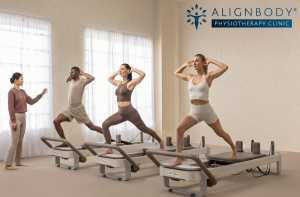
Pilates focuses on stabilizing the spine and pelvis, strengthening deep abdominal and back muscles, and improving body awareness and alignment. Because of its precision and low-impact, many physical therapists and rehab specialists integrate Pilates principles into injury recovery programs. Step Into Smarter Healing- Experience Next-Level Physiotherapy Clinic in South Delhi. I prescribe Pilates-based programmes for patients recovering from spinal surgeries, disc herniations, hip replacements, and those suffering from diastasis recti (post-partum abdominal separation).
Two Main Pilates Formats: Mat vs Reformer
Mat Pilates – Floor-based exercises using body weight, resistance bands, and small props. Affordable, accessible, and ideal for home practice. Perfect starting point for beginners. At AlignBody, we recommend Mat Pilates to patients recovering from mild to moderate injuries.
Reformer Pilates – Uses a spring-loaded sliding carriage (the Reformer machine) for precise, resistance-based training. Provides more exercise variety and is used heavily in clinical rehabilitation. Ideal for post-surgical recovery, diastasis recti rehabilitation, and advanced postural correction.
Key Health Benefits of Pilates: Core, Posture & Rehab
Pilates provides targeted, clinically relevant benefits that make it the preferred exercise modality in physiotherapy and rehabilitation settings worldwide.
– Strengthens deep core muscles — Pilates specifically targets the transverse abdominis, multifidus, diaphragm, and pelvic floor — the four muscles that form the body’s natural “corset.” Stronger deep core muscles reduce spinal load and prevent recurrence of low back pain.
– Improves posture and spinal alignment — The emphasis on neutral spine, shoulder blade positioning, and pelvis alignment makes Pilates uniquely effective for correcting postural imbalances caused by desk work and sedentary lifestyles.
– Aids injury rehabilitation — At AlignBody, Pilates-based programmes are prescribed for patients recovering from disc herniations, hip replacements, spinal surgeries, and diastasis recti (post-partum abdominal separation).
– Enhances athletic performance — Improved neuromuscular coordination, body awareness, and core stability directly translate to better performance in running,swimming,
cycling, and team sports.
– Low-impact and joint-friendly — Because Pilates avoids heavy loading and high-impact movements, it is safe for older adults, pregnant women (with modifications), and
those with arthritis or osteoporosis.
Yoga vs Pilates: 7 Key Differences Explained
Yoga and Pilates both improve strength, flexibility, balance, and body awareness — but they differ significantly in origin, focus, equipment, and best use cases. Here are the 7 most important differences between yoga and Pilates:
1. Origin & Philosophy — Yoga originated in ancient India (~3000 BCE) as a spiritual, mental, and physical practice. Pilates was developed in Germany/UK in the early 20th century as a physical rehabilitation system with no spiritual component.
2. Primary Focus — Yoga prioritises flexibility, breath, mindfulness, and overall wellness. Pilates focuses on deep core strength, spinal stability, and precise movement control.
3. Breathwork — Yoga uses diaphragmatic and pranayama breathing to activate the parasympathetic nervous system. Pilates uses lateral thoracic breathing to keep the core engaged while moving.
4. Equipment — Yoga requires a mat and optional props (blocks, straps, bolsters). Pilates can be mat-based or use specialised equipment (Reformer, Cadillac, Wunda Chair).
5. Mental Health Component — Yoga has a much stronger mindfulness and meditation component, making it more effective for stress, anxiety, and depression. Pilates is primarily physical with less emphasis on mental wellness.
6. Rehabilitation Use — Pilates is more widely used in clinical physiotherapy settings for injury recovery and post-surgical rehabilitation. Therapeutic yoga is used as a complementary approach for chronic conditions.
7. Spirituality — Yoga has deep philosophical and spiritual roots (chakras, doshas, meditation). Pilates is a purely physical exercise system with no spiritual component.
| Aspect | Yoga | Pilates |
| Primary Focus | Flexibility, balance, and mind–body connection | Core strength, posture, and stability |
| Origin | Ancient Indian spiritual practice | The 20th-century exercise method developed by Joseph Pilates |
| Typical Class Feel | Flowing movements or held poses with stretching and relaxation | Precise and controlled repetitions focused on muscle engagement |
| Breathing Style | Varies by yoga style, often includes nasal breathing and pranayama | Breathing coordinated with core engagement |
| Equipment | Mostly a mat and simple props | Mat plus reformers and other specialized equipment |
| Common Use Cases | Stress relief, flexibility, and balance improvement | Rehabilitation, core strengthening, and posture correction |
Yoga vs Pilates: Which Is Better for Your Goal?
Neither yoga nor Pilates is universally ‘better’ — the right choice depends entirely on your specific health goal. Here’s a quick guide:
- Choose Yoga if: You want to reduce stress and anxiety, improve flexibility, sleep better, or explore mindfulness and meditation alongside movement.
- Choose Pilates if: You want to strengthen your core, correct your posture, recover from an injury or surgery, or rebuild functional strength with clinical precision.
- Choose Both if: You want a complete fitness routine — Pilates for structural strength and yoga for flexibility and mental wellbeing. Many patients at AlignBody Delhi practise both in complementary schedules.
Yoga and Pilates are good for absolute beginners when taught under the guidance of a qualified instructor, but what matters in your case is your goals. Are you looking to ease into movement, improve flexibility, and reduce stress? A beginner gentle yoga or Hatha yoga class may be your easiest starting point. Rebuild your body strength with Pilates therapy classes in Delhi.
If your main goal is core strength, posture, or rehab‑friendly conditioning, beginner mat Pilates is an excellent starting choice. In many cases, people benefit from starting with one and later adding the other, creating a complementary routine that balances mobility and strength.
Comprehensive comparison: Yoga vs Pilates
| Category | Yoga | Pilates | Edge |
| Core strength | Moderate — engaged in many poses | Superior — systematic deep core focus | Pilates |
| Flexibility | Superior — long holds, fascia release | Good — functional range of motion | Yoga |
| Mental health & stress | Superior — meditation, breathwork, spirituality | Good — mindful movement reduces stress | Yoga |
| Rehabilitation use | Good — therapeutic yoga is widely used | Superior — standard physiotherapy tool | Pilates |
| Posture improvement | Good — alignment cues in all styles | Superior — biomechanics-first approach | Pilates |
| Weight loss support | Good — Vinyasa/Ashtanga burn significant calories | Moderate — lower caloric expenditure | Yoga |
Yoga vs Pilates for Core Strength: Which Builds More Muscle?
Pilates is superior to yoga for building deep core strength and muscle endurance. While yoga engages the core in many poses, Pilates systematically isolates and strengthens the transverse abdominis, multifidus, and pelvic floor – the deep stabilisers that support the spine.
Though core stabilization is the ultimate goal of both Pilates and yoga, Pilates exercises are more specific for strengthening the core and toning muscles and controlling the pelvis-to-rib cage-to-shoulder complex. There are relatively few big-muscle, strength-training exercises in Pilates. Pilates exercises also emphasize deep abdominal and spinal stabilizers through very controlled, usually small‑range exercises that lead to high muscle activation with somewhat less impact.
Strength is built in the body generally by bearing the body’s weight in asanas such as Plank, Chaturanga, Warrior series, and balances, which activate multiple muscles involving the calves, shoulders, and back. Dynamic ways like Vinyasa and Power Yoga offer for the improvement of muscular stamina and consequent muscle tone in other muscle groups.
Yoga vs Pilates for Back Pain: Which Is Better for Recovery?
For chronic low back pain, Pilates is generally recommended as the first-line exercise therapy because it directly
strengthens the core muscles that support the lumbar spine. Yoga is an effective complementary approach for managing pain through flexibility, stress reduction, and breath control.
Just as yoga dissolves pain by improving posture, coordination, and core strength, Pilates aims for the same end by giving slightly different exercises. Over time and with the expertise of analysis, Pilates is the exercise of choice recommended by most physiotherapists, and the person is able to work out and strengthen the core of the body, and make better use of the abdominal wall.
Practising yoga loosens tight muscles to relieve back pain, improves spinal flexibility, and decreases stress with breathing techniques and relaxation techniques. In general, gentle yoga practices have a moderate effect on chronic low back pain if they are individualized, whereas one-to-one or therapeutic sessions have more individualized influences.
Equipment Used in Pilates vs Yoga
According to AlignBody, yoga generally requires minimal equipment: a non‑slip mat plus optional props like blocks, straps, bolsters, blankets, and sometimes a yoga wheel. These props help modify poses, improve alignment, and support relaxation in restorative sessions.
Pilates can be done with just a thicker, more cushioned mat, but studio‑based Pilates often uses Reformers, Cadillacs, Wunda Chairs, Pilates rings, resistance bands, balls, and foam rollers to add resistance and support. For home workouts, a supportive mat plus a ring, mini‑ball, and loop bands can create a very versatile setup.
| Practice | Essential at Home | Common Studio Equipment |
| Yoga | Mat, optional blocks & strap | Bolsters, blankets, wheels |
| Pilates | Thicker mat, small | Reformer, Cadillac, Chair, rings, bands, rollers |
Popular Types of Yoga and Pilates: Which Style Is Right for You?
Choosing the right style within yoga or Pilates is just as important as choosing between them. Here is a complete
breakdown of the most popular types and what each is best suited for:
| Category | Style / Type | Best For |
| Yoga | Hatha | Beginners, basics, gentle strength |
| Yoga | Vinyasa / Flow | Cardio, strength, flexibility |
| Yoga | Yin / Restorative | Deep stretching, recovery, stress relief |
| Yoga | Power / Ashtanga | Strong conditioning, endurance |
| Pilates | Mat Pilates | Home practice, beginners, minimal equipment |
| Pilates | Reformer Pilates | Strength, alignment with resistance |
| Pilates | Clinical Pilates | Rehabilitation and medical conditions |
| Hybrid | Yogilates | A mix of yoga flexibility and Pilates core strength |
Yoga vs Pilates: Pros and Cons Compared
Pros-
Yoga- Improves flexibility & balance, reduces stress & anxiety, minimal equipment.
Pilates- Strong core & posture benefits, rehab‑friendly, precise, and low‑impact
Cons-
Yoga- Some poses are stressful for joints if misaligned, style choice can be confusing.
Pilates- Studio equipment can be costly, and may feel technical for some beginners.
Expert Tips for Beginners Starting Pilates or Yoga
According to Dr. Richa Gupta, physiotherapist and founder of AlignBody Physiotherapy Clinic, Delhi: ‘The most common mistake beginners make is comparing their progress to others. Both yoga and Pilates require patience and consistency – not intensity. Start slow, prioritise proper technique, and always inform your instructor about existing injuries or medical conditions.
Experts recommend starting with beginner‑friendly, well‑instructed classes, focusing on form, breath, and consistency rather than intensity.
Listening to your body, avoiding pain, and telling the instructor about any injuries or conditions is crucial.
Common Mistakes Beginners Make in Pilates and Yoga
| Common Mistake | Better Approach |
| Forcing deep stretches | Use props and stay in a mild to moderate stretch |
| Holding breath | Inhale to prepare and exhale during effort |
| Skipping modifications | Choose beginner options to build a safe foundation |
| Infrequent practice | Aim for 2–3 sessions per week |