Is Shockwave Therapy Safe? A Delhi Physiotherapist’s Complete Answer
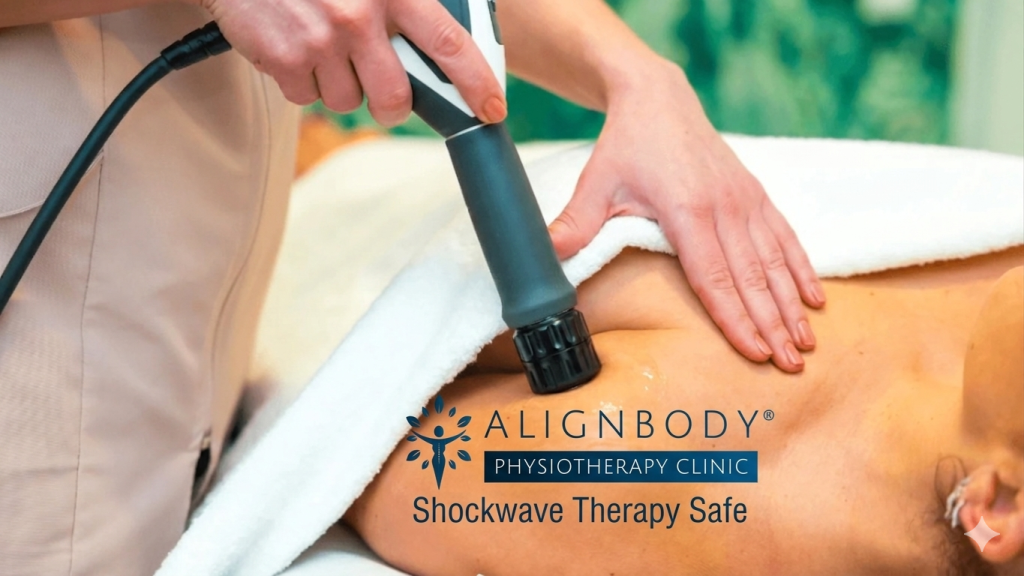
Is Shockwave Therapy Safe? A Delhi Physiotherapist Answers Every Safety Question — Honestly
Safety is the first question. It should be.
Before any patient at AlignBody undergoes shockwave therapy, we complete a full clinical assessment. Not because the treatment is dangerous — it isn’t, for the majority of people — but because “generally safe” does not mean “safe for everyone.” There are specific contraindications that matter, and knowing them before you book a session can prevent genuine harm.
I’m Dr. Richa Gupta, founder of AlignBody Physiotherapy Clinic – with clinics in Jagriti Enclave, East Delhi and Vasant Vihar, South Delhi. In this guide, I’m going to answer every variation of the safety question directly — including the ones about pregnancy, cancer, children, plantar fasciitis, and anaesthesia. Clear, clinical, and honest.
Is Shockwave Therapy Safe? — The General Answer
Shockwave therapy — formally called Extracorporeal Shockwave Therapy (ESWT) — has been FDA-approved for the treatment of plantar fasciitis and tennis elbow and has been used clinically for over 25 years across orthopaedics, sports medicine, and physiotherapy.
A 2020 update published in PMC (Gleitz et al.) stated directly: “ESWT is a safe therapy and there are only a few side effects known, but no severe complications are to be expected if it is performed as recommended.” The International Society for Medical Shockwave Treatment (ISMST) publishes clinical guidelines that, when followed, make ESWT a very low-risk intervention.
The key phrase is “when performed as recommended.” That means proper diagnosis, full patient assessment, correct equipment calibration, and treatment delivered by a clinician who understands both the indications and the contraindications. This is why who delivers your shockwave therapy matters more than almost anything else. Struggling with leg pain or numbness? Discover effective sciatica pain treatment in Delhi.
Common Side Effects of Shockwave Therapy – What Is Normal and Expected
These side effects occur in a meaningful proportion of patients and are a sign the tissue is responding – not a sign that something has gone wrong:
| Side Effect | Frequency | Duration | Management |
|---|---|---|---|
| Soreness at the treatment site | Very common | 24–72 hours | Cold pack, rest, paracetamol if needed |
| Skin redness (erythema) | Common | Hours to 1 day | Resolves on its own — do not apply heat |
| Mild swelling | Common | 24–48 hours | Elevate the lower limb; cold pack |
| Minor bruising | Occasional | 3–7 days | Normal — especially in areas with thin skin |
| Temporary pain increase | Occasional | First 24–48 hours after session | Expected — tissue healing response has been triggered |
| Numbness/tingling | Rare, brief | Minutes to hours post-session | Report if persistent beyond 24 hours |
What is not normal — and what should prompt you to contact your physiotherapist: pain that worsens significantly beyond 72 hours, spreading redness suggesting infection, or any neurological symptoms (weakness, persistent numbness) in the treated limb.
Serious complications — tendon rupture, nerve damage, vascular injury — are extremely rare and almost always associated with improper technique, incorrect diagnosis, or use in contraindicated situations. These are not risks of shockwave therapy performed correctly — they are consequences of it being performed incorrectly. Take the first step towards relief—know more about arthritis treatment today.
| 🤰 Is Shockwave Therapy Safe During Pregnancy? |
| Clear answer: NO. Shockwave therapy is absolutely contraindicated during pregnancy — regardless of which body part is being treated. |
This is one of the few absolute contraindications in shockwave therapy — meaning there are no exceptions and no circumstances under which it is appropriate.
Animal studies have provided the clinical basis for this recommendation. Research involving pregnant rats exposed to shockwave energy showed offspring with significantly lower birth weight compared to unexposed controls. A separate study using chicken embryos found that shockwave exposure caused a dose-dependent increase in embryo deaths and, in some survivors, severe developmental abnormalities.
There are no human clinical trials on shockwave therapy in pregnant women — and there won’t be, because the risk profile makes such a trial ethically unacceptable. Medical guidelines, therefore, take a precautionary position: no shockwave therapy, in any location on the body, during pregnancy.
This includes treatments that might seem distant from the fetus — for example, a shockwave to the foot or shoulder in a pregnant patient. The conservative clinical guidance from the ISMST is “no” — because the principle of fetal protection outweighs the benefit of the treatment in virtually every non-emergency clinical scenario.
If you are pregnant and dealing with a musculoskeletal condition that was previously being managed with shockwave therapy, please come and see us. Our pre and post natal physiotherapy programme offers safe, evidence-based alternatives throughout every stage of pregnancy and postpartum recovery.
| 🦶 Is Shockwave Therapy Safe for Plantar Fasciitis? |
| Clear answer: YES — this is the application with the strongest safety and efficacy evidence. |
Plantar fasciitis is, in fact, one of the original FDA-approved indications for shockwave therapy. It has the most robust body of clinical evidence of any ESWT application — and that evidence demonstrates both strong effectiveness and an excellent safety profile.
A 2020 PMC study involving 56 patients with chronic plantar fasciitis found significant improvement in pain, function, and quality of life at 3, 6, and 12 weeks post-treatment, with no serious adverse events reported. Multiple meta-analyses confirm this: ESWT for plantar fasciitis produces consistent outcomes and minimal risk when the patient has been properly assessed.
The typical side effects for heel shockwave therapy — soreness, redness, and temporary pain increase — are expected and resolve quickly. The tissue at the plantar fascia insertion is well-suited to shockwave delivery, and the treatment zone is away from any critical structures that would increase risk.
The only situation where plantar fasciitis shockwave is not appropriate is within 6 weeks of a steroid injection into the heel. Steroids weaken the plantar fascia tissue; introducing mechanical shockwaves into freshly steroid-injected tissue increases rupture risk. We always ask about injection history at AlignBody before beginning treatment.
If you have been diagnosed with plantar fasciitis and have had the condition for more than 3 months without adequate resolution, shockwave therapy at AlignBody is a safe and highly appropriate next step.
| 👦 Is Shockwave Therapy Safe for Children? |
| Clear answer: Generally not recommended for children under 18, with specific caution. |
Children and adolescents have active growth plates — areas of developing cartilage near the ends of long bones where bone elongation occurs until skeletal maturity. Shockwave therapy near active growth plates carries a theoretical risk of disrupting normal bone development, and this risk is taken seriously enough that most clinical guidelines list active skeletal growth as a contraindication or relative contraindication.
The International Society for Medical Shockwave Treatment (ISMST) recommends caution in patients under 18, particularly for treatments near growth plates at the knee, ankle, hip, and shoulder.
There is limited published evidence on shockwave therapy in children and adolescents. The clinical trials that establish ESWT’s safety profile were almost entirely conducted in adult populations. In the absence of clear paediatric safety data, the conservative position is to avoid ESWT in children except in specific, carefully considered circumstances under specialist oversight.
What this means practically: if your child has a heel pain condition such as Sever’s disease (calcaneal apophysitis — the most common cause of heel pain in growing children), shockwave therapy is not the recommended approach. Sever’s disease typically responds very well to physiotherapy, activity modification, heel lifts, and calf stretching. These should be tried first — and are usually sufficient. Our sports physiotherapy team manages paediatric sports injuries regularly and can advise on the safest approach.
For adolescents near skeletal maturity (typically 16–18 years), the risk profile changes and shockwave therapy may be considered case-by-case. This decision should be made by an experienced clinician with knowledge of the individual’s growth stage — not applied as a standard protocol.
| 🔴 Is Shockwave Therapy Safe for Cancer Patients? |
| Clear answer: NOT in or near the cancer site. Safe in distant, unaffected areas with caution.
This is not a simple yes or no — it requires clinical judgment case by case. |
Active cancer within or directly adjacent to the treatment area is an absolute contraindication for shockwave therapy. The reason is biological: ESWT promotes neovascularisation — new blood vessel formation. This same mechanism that makes it effective for tendon healing could theoretically support tumour growth or metastasis by increasing the vascular supply to malignant tissue.
Specifically contraindicated: malignant tumours, metastases, multiple myeloma, or lymphoma in the intended treatment area. If there is any active cancer in or near the region to be treated, shockwave therapy should not be given.
What about cancer patients whose cancer is not at the treatment site? This is less clear-cut. A cancer patient with plantar fasciitis, for example — where the cancer is in a completely different body region — presents a different clinical question. In practice, many clinicians apply a conservative approach and avoid ESWT in any cancer patient until oncological clearance has been given.
The pragmatic guidance: if you have an active cancer diagnosis — regardless of location — disclose this before any shockwave therapy assessment. A responsible physiotherapist will consult with your oncology team or obtain written clearance before proceeding. This is the standard we apply at AlignBody. Cancer diagnosis is not necessarily a bar to treatment — it is a trigger for careful, multidisciplinary decision-making. Physiotherapy and orthopaedic treatment aren’t the same — and knowing the difference helps you heal faster.
Note: Cancer in remission with no active disease at or near the treatment site, in a patient who has completed treatment, is generally a different clinical situation. Many such patients receive shockwave therapy safely. Again, individual assessment and oncological clearance are the appropriate steps.
| ℹ️ Is Shockwave Therapy Safe for ED (Erectile Dysfunction)? |
| Important note: ED-focused shockwave therapy is a separate clinical application from musculoskeletal ESWT — administered by urologists and sexual health specialists, not physiotherapy clinics. AlignBody treats musculoskeletal conditions only. This section addresses the safety question for informational purposes. |
Low-intensity shockwave therapy (Li-ESWT) is used by urologists for erectile dysfunction — it works by stimulating angiogenesis (new blood vessel growth) in penile tissue and has shown promising evidence for vasculogenic ED. This is a different protocol, different equipment setting, and different clinical application from the musculoskeletal ESWT used by physiotherapists.
The safety profile of Li-ESWT for ED, when administered by a qualified urologist using appropriate equipment, is generally considered acceptable, with common side effects limited to mild discomfort and temporary minor bruising. There are no major organ systems at risk from correctly delivered low-intensity treatment in this region.
Where safety concerns arise: the use of inappropriate devices (high-energy machines not calibrated for this application), unqualified administrators, or the use of consumer ‘home devices’ marketed for ED treatment — all of which carry higher risks than the clinical protocol.
If you’re seeking shockwave therapy for ED, this is a consultation for your urologist — not your physiotherapist. If you’re searching for physiotherapy-related shockwave therapy services in Delhi NCR — for musculoskeletal pain, heel pain, tendon conditions — AlignBody is the right place to start.
| 💉 Is Shockwave Therapy Safe to Use With Anaesthesia? |
This question reflects a common concern — people have heard that shockwave therapy can be painful and wonder whether anaesthesia is needed or safe to use alongside it.
Does Shockwave Therapy Require Anaesthesia?
For standard radial shockwave therapy — the type used most commonly in physiotherapy clinics, including AlignBody — anaesthesia is not required. The discomfort during treatment is real and therapeutic — patients typically describe it as an intense tapping or pressure sensation over the most sensitive points — but it is tolerable, and the intensity is adjusted continuously based on patient feedback.
We calibrate every session at AlignBody based on real-time patient response. The goal is to work at the edge of discomfort, not into genuine pain. Sessions last 5 to 15 minutes. Most patients complete the full course without any form of pain management beyond post-session ice.
When Anaesthesia Might Be Used
High-energy focused shockwave therapy — used for conditions like kidney stones, calcific shoulder tendinitis with dense calcium deposits, and some bone non-union cases — can require local anaesthesia due to the significantly higher energy levels involved.
However, research has shown an important limitation of anaesthesia with ESWT: local anaesthetics may reduce the effectiveness of the treatment. The biological healing cascade triggered by shockwave therapy involves pain pathways — specifically Substance P and CGRP (calcitonin gene-related peptide). Anaesthesia that numbs these pathways may blunt the cellular signalling that makes ESWT work. This is one reason low-to-moderate energy shockwave without anaesthesia often produces better long-term outcomes than high-energy anaesthetised sessions.
The clinical guidance from the ISMST: avoid local anaesthesia before shockwave therapy unless high-energy focused ESWT makes it genuinely necessary. For the radial shockwave protocol used in physiotherapy — including at AlignBody — anaesthesia is neither needed nor recommended.
Is It Safe to Take Painkillers Before a Shockwave Session?
Avoid NSAIDs (ibuprofen, naproxen, diclofenac) for 48 hours before and after shockwave therapy. These anti-inflammatory medications suppress the exact inflammatory response that shockwave therapy is designed to trigger. Taking them around the time of treatment essentially works against the treatment’s mechanism.
Paracetamol is acceptable if discomfort is significant after a session — it provides pain relief without anti-inflammatory suppression of the healing process.
Complete Safety Checklist – Who Should Not Have Shockwave Therapy in Delhi
| Category | Situation | Clinical Guidance |
|---|---|---|
| ABSOLUTE — Never treat | Pregnancy (any stage, any body part) | Treatment is absolutely contraindicated |
| ABSOLUTE — Never treat | Active cancer / malignancy at treatment site | Risk of promoting tumour growth |
| ABSOLUTE — Never treat | Severe blood clotting disorder (coagulopathy) | Risk of uncontrolled tissue bleeding |
| ABSOLUTE — Never treat | Active severe infection in treatment area | Risk of spreading infection via increased blood flow |
| ABSOLUTE — Never treat | Open wounds or skin breakdown at treatment site | Energy cannot be safely delivered through damaged skin |
| HIGH CAUTION — Specialist decision | Active cancer elsewhere in body | Obtain oncological clearance before treating |
| HIGH CAUTION — Specialist decision | Pacemaker or implanted electronic device | Avoid ESWT in region close to the device |
| HIGH CAUTION — Specialist decision | Children under 18 / active growth plates | Consult regarding growth plate proximity and skeletal age |
| HIGH CAUTION — Wait period | Steroid injection in same area within 6 weeks | Wait minimum 6 weeks to reduce rupture risk |
| RELATIVE — Clinical judgment | Blood thinning medication (anticoagulants) | Assess risk of bruising / haematoma; possible dose adjustment |
| RELATIVE — Clinical judgment | Nerve damage or neuropathy in treatment region | Caution — altered pain response affects dosing guidance |
How AlignBody Ensures Safety Before Every Shockwave Session
The single most important safety measure in shockwave therapy is the pre-treatment assessment. At AlignBody, every patient receives a clinical assessment before their first ESWT session that covers:
- Diagnosis confirmation — shockwave therapy is only appropriate for specific diagnoses. We confirm the diagnosis before treatment, not assume it from a self-reported symptom
- Medical history review — covering all contraindications listed above: pregnancy, cancer history, medications (especially blood thinners and recent steroids), pacemakers, and active infections
- Previous treatment history — particularly steroid injections in the area, the dates, and how many
- Equipment calibration — the energy level, frequency, and number of impulses are set specifically for your condition, your tissue sensitivity, and your clinical presentation
- Informed consent — we explain what you’ll feel during treatment, what side effects to expect, and what would warrant contacting us between sessions
This is not administrative box-ticking. It is the clinical framework that makes shockwave therapy safe. The treatment’s safety record is built on these protocols being followed, which is why we apply them without exception at our clinics in East Delhi and South Delhi.
FAQ’s About Shockwave Therapy
Q: Is shockwave therapy safe?
A: Yes — for most people. Shockwave therapy is FDA-approved, non-invasive, and has an excellent safety record when delivered by a trained clinician following established protocols. Common side effects — temporary soreness, redness, and mild bruising — resolve within 24 to 72 hours. Serious complications are rare. There are specific contraindications (pregnancy, active cancer in the treatment area, blood clotting disorders) that must be assessed before treatment.
Q: Is shockwave therapy safe during pregnancy?
A: No. Shockwave therapy is absolutely contraindicated during pregnancy at any stage and in any body region. Animal studies have demonstrated potential developmental harm from shockwave exposure, and the precautionary principle is applied universally: no shockwave therapy for pregnant patients, regardless of the body part being treated.
Q: Is shockwave therapy safe for plantar fasciitis?
A: Yes — plantar fasciitis is one of the original FDA-approved indications for ESWT, with the strongest safety and efficacy evidence of any shockwave application. The one precaution: avoid shockwave therapy within 6 weeks of a steroid injection into the heel, as this increases tissue rupture risk.
Q: Is shockwave therapy safe for children?
A: Generally not recommended for children under 18, particularly in areas near active growth plates. There is limited paediatric safety data, and the risk of disrupting normal skeletal development near growth plates makes clinical guidelines cautious. Paediatric foot and tendon conditions typically respond well to physiotherapy and conservative management without ESWT.
Q: Is shockwave therapy safe for cancer patients?
A: Not in or near the cancer site — active cancer in the treatment area is an absolute contraindication, as ESWT’s tissue-stimulating effects could theoretically promote tumour growth. For cancer patients whose cancer is in a completely different region of the body, clinical assessment and oncological clearance are required before proceeding. Cancer in remission with no active disease is evaluated case by case.
Q: Does shockwave therapy need anaesthesia?
A: No, for standard radial shockwave therapy as used in physiotherapy, anaesthesia is neither required nor recommended. The treatment involves therapeutic discomfort that is calibrated to patient’s tolerance. Research suggests local anaesthesia may actually reduce ESWT’s effectiveness by suppressing the pain pathways involved in the healing response. Avoid NSAIDs for 48 hours around treatment; paracetamol is acceptable for post-session soreness.
Q: Is shockwave therapy safe if I am on blood thinners?
A: This is a relative contraindication requiring clinical assessment. Blood-thinning medications increase the risk of bruising and haematoma formation at the treatment site. A clinician needs to review your specific medication, dosage, and treatment area before proceeding. Some patients on blood thinners can safely receive shockwave therapy with appropriate precautions; others may need to hold the medication temporarily with their prescribing doctor’s guidance.
Q: Who should not have shockwave therapy?
A: Absolute contraindications: pregnancy, active cancer at the treatment site, severe blood-clotting disorders, active infection at the treatment site, and open wounds at the treatment site. High-caution situations requiring specialist assessment: pacemaker or implanted electronic device, children under 18, cancer diagnosed elsewhere in the body, or steroid injection in the same area within 6 weeks. This list is not exhaustive — a full assessment by a trained physiotherapist is always required before treatment.
The Bottom Line
Shockwave therapy is safe for the right patient, with the right diagnosis, delivered by the right clinician.
That’s not a hedge. It’s the clinical truth. The treatment has an excellent 25-year safety record because the medical community has taken the contraindications seriously and built assessment protocols that identify who should and shouldn’t receive it before the first session begins.
If you’re in Delhi NCR and considering shockwave therapy — for plantar fasciitis, Achilles tendon pain, calcific shoulder tendinitis, or any other condition — the safest first step is a proper clinical assessment at AlignBody. We’ll confirm whether you’re appropriate for ESWT, explain what to expect, and ensure your treatment is delivered with both clinical precision and patient safety as the non-negotiable baseline.
| Book Your Shockwave Therapy Consultation in Delhi – AlignBody
Clinically administered, properly assessed – Delhi NCR East Delhi: Jagriti Enclave | South Delhi: Vasant Vihar +91 9310 014 226 | alignbody.in/contacts/ |
| Written by
Dr. Richa Gupta — Founder & MD, AlignBody Physiotherapy Clinic, Delhi NCR 14+ years of clinical experience using shockwave therapy and physiotherapy to treat musculoskeletal conditions across Delhi NCR. Certified APBC practitioner (USA & Thailand), Diploma in Osteopathy (Ontario, Canada). Founder of AlignBody — East Delhi (Jagriti Enclave) and South Delhi (Vasant Vihar). 20,000+ patients treated. Medically reviewed and accurate as of April 2025. |