Kyphosis and Physiotherapy: What Treatment Can and Cannot Do
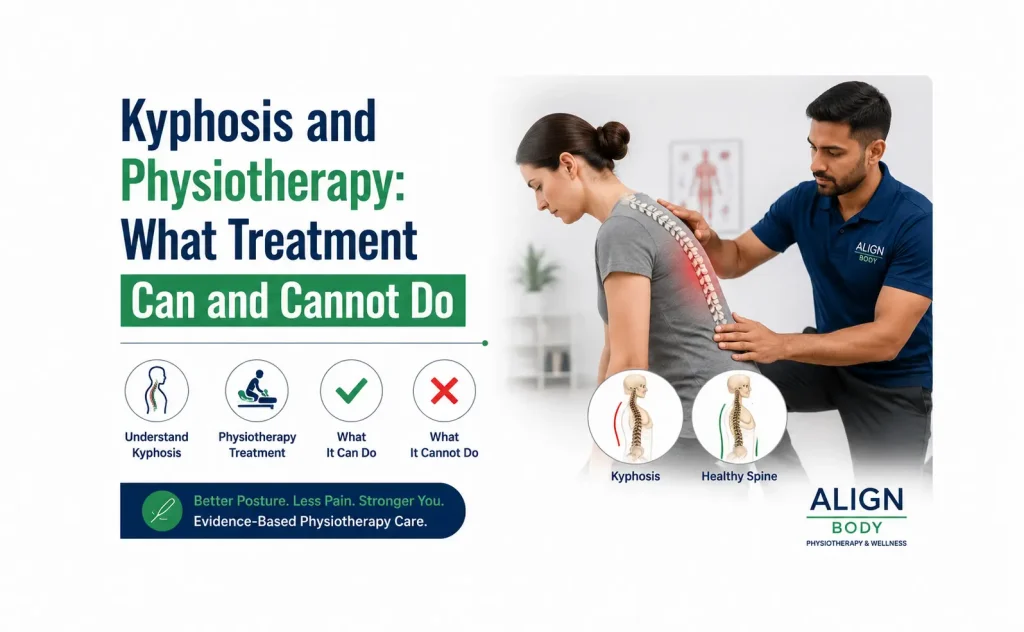
Physiotherapy can significantly improve postural kyphosis (rounded upper back from habit and muscle imbalance) in both young people and adults. It cannot reverse structural kyphosis caused by Scheuermann’s disease or severe wedge fractures in older adults. The right physiotherapy programme includes thoracic mobility work, posterior chain strengthening and posture habit correction. Realistic improvement is achievable in three to six months.
Kyphosis refers to an excessive forward curvature of the thoracic spine. A mild curve in the upper back is completely normal. The problem is when that curve becomes significantly exaggerated, visible and associated with pain or functional limitation.
People searching for kyphosis physiotherapy treatment want to know two things: can it actually help and what would treatment involve? This guide answers both honestly.
Types of Kyphosis: Why the Type Matters for Treatment
Postural Kyphosis
This is the most common type and the most responsive to physiotherapy. It develops from sustained poor posture, prolonged sitting, weak posterior chain muscles and tight chest and anterior shoulder structures. The spine itself has not structurally changed. The joints are mobile. The curve is increased because of muscle imbalance and habitual positioning.
Postural kyphosis can be fully corrected with the right physiotherapy programme. This is the type most commonly seen in desk workers, students and people who spend long hours at computers.
Scheuermann’s Kyphosis
Scheuermann’s disease affects adolescents and causes structural changes to the thoracic vertebrae themselves. The front edges of the vertebrae grow less than the back edges, leading to a wedge shape that creates a fixed forward curve. Once these changes are established, they are permanent. Physiotherapy cannot change the vertebral shape.
What physiotherapy can do for Scheuermann’s kyphosis is reduce pain, improve the strength of the muscles that support the spine and prevent the curve from worsening. It can also improve function and reduce the symptoms that come from the secondary muscle imbalances around the primary structural problem.
Age-Related Kyphosis (Osteoporotic)
In older adults, kyphosis is often associated with osteoporosis and vertebral compression fractures. The wedge fractures that occur in osteoporotic vertebrae create a permanent structural kyphosis. Physiotherapy focuses on pain management, maintaining mobility, strengthening the muscles that support the spine and reducing fall risk rather than reversing the curve.
Physiotherapy Treatment for Postural Kyphosis
Thoracic Mobility Work
The thoracic spine in postural kyphosis is typically stiff and restricted in extension. Manual therapy mobilisation of the thoracic joints and rib joints is used to restore the normal range of extension movement. This makes the subsequent exercises far more effective because the joints can now move into the range you are trying to strengthen.
Posterior Chain Strengthening
The muscles that hold the thoracic spine in extension (rhomboids, middle and lower trapezius, thoracic erector spinae) are typically weak and inhibited in kyphosis. Targeted strengthening of these muscles using rows, scapular retractions, face pulls and thoracic extension exercises progressively builds the strength needed to maintain good alignment.
Chest and Anterior Shoulder Stretching
The pectorals and anterior deltoid are typically shortened and tight in kyphosis, pulling the shoulders forward. Regular doorway chest stretches, foam roller thoracic extension and specific shoulder mobility work addresses these shortened structures and allows the thoracic spine to move into extension more freely.
Deep Cervical Flexor Training
Kyphosis of the thoracic spine is frequently accompanied by forward head posture as the head compensates for the rounded upper back. Chin tuck exercises that activate the deep cervical flexors address this compensatory head position as part of the overall treatment.
Posture Habit Correction
This is the element that most people underestimate. The exercises can create the capacity for better posture but the brain needs to re-learn new default positions. Specific advice about sitting posture at work, how to set up your workstation, how to carry a bag and how to stand is essential alongside the exercises.
Realistic Outcomes for Kyphosis Physiotherapy
For postural kyphosis in adults and young people, significant and visible improvement is achievable with consistent physiotherapy over three to six months. The curve may not return to a perfectly neutral position but the difference is typically visible and meaningful.
Scheuermann’s kyphosis responds well to pain management and functional improvement but the structural curve will not change. Patients can achieve much better strength, reduced pain and improved appearance through better muscle support even though the vertebral shape remains.
What Kyphosis Physiotherapy Looks Like at AlignBody
At AlignBody, kyphosis treatment starts with a thorough postural assessment that determines the type of kyphosis, measures the degree of curve, identifies the specific muscle imbalances present and confirms whether there is any pain or neural involvement.
The treatment programme is structured around the findings: joint mobilisation to restore thoracic extension, specific targeted exercises for your pattern of weakness and tightness and advice on the daily habits that need to change for lasting improvement.
Book a Posture and Kyphosis Assessment at AlignBody, DelhiEast Delhi: Jagriti Enclave | South Delhi: Vasant Vihar | +91 9310 014 226