Shockwave Therapy for Achilles Tendinopathy: Evidence & Treatment
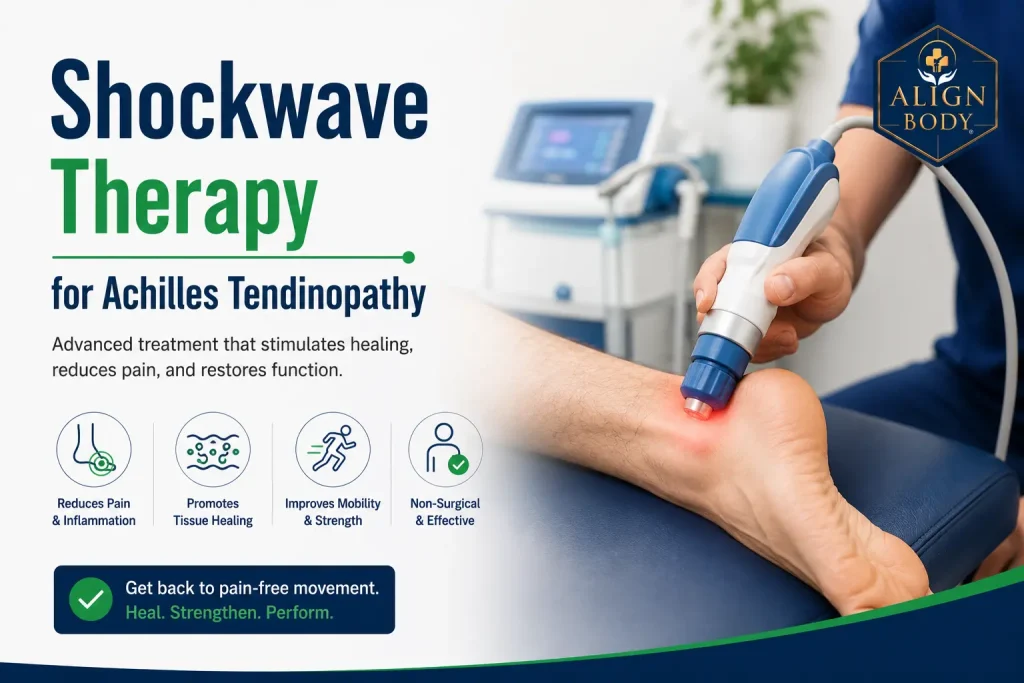
Stubborn heel pain after every run? Ankle that aches walking downstairs? If rest, stretching and standard physio haven’t fixed it, your physio has probably brought up shockwave therapy for Achilles tendinopathy at some point. It’s one of the few device-based options with real research behind it, so let’s look at what actually happens in a session and what the studies say.
Table of Contents
- What Is Shockwave Therapy for Achilles Tendinopathy
- How Many Sessions Are Usually Needed
- What Happens During a Session
- Can You Walk After Shockwave Therapy
- Does It Actually Work
- Who Should Avoid It
- Getting Shockwave Therapy for Achilles Tendinopathy in Delhi
- Frequently Asked Questions
What Is Shockwave Therapy for Achilles Tendinopathy
Short answer: it’s sound wave pulses aimed at the sore part of your tendon to kick blood flow and healing into gear. A clinician runs a handheld probe over the mid-portion or the insertion point near your heel bone, firing around 2000 pulses in a session. We use the same machine at AlignBody for heel and knee pain. The Achilles protocol works almost the same way, just with the probe angled differently depending on where the pain sits. If you want to see how the two delivery modes compare, we’ve broken down radial vs focused shockwave therapy separately. Most physios won’t reach for this on day one either. Conservative treatment like eccentric loading and cutting back on aggravating activity usually gets six weeks first.
How Many Sessions Are Usually Needed
Three to four, spaced a week to ten days apart, is the standard course. That gap isn’t random, the tendon needs time to respond to one round of pulses before it gets hit again. Insertional tendinopathy near the heel bone is stubborn and sometimes needs five or six sessions instead. A physio worth seeing checks your pain and function every couple of sessions rather than locking you into a fixed number from day one.
What Happens During a Session
You’ll hear a tapping sound and feel the probe move across the tendon. It’s uncomfortable more than painful for most people though insertional cases near the bone can sting a bit more. No numbing gel needed usually. The whole thing including setup wraps up in under fifteen minutes. You’ll get asked to rate the discomfort as it goes so the practitioner can back off the intensity if needed.
Can You Walk After Shockwave Therapy
Yes. Walking is fine straight after. What you want to skip for the next 48 hours is running, jumping or anything plyometric since the tendon needs a short window to calm down. Some soreness or a bruised feeling for a day or two is normal and settles on its own. Ice if it feels sharp though it’s not mandatory.
Does It Actually Work
Here’s the honest part. Studies on PubMed Central and elsewhere show real pain relief and better function in chronic cases that hadn’t responded to anything else particularly insertional tendinopathy. But a 2026 review in the Journal of Orthopaedic & Sports Physical Therapy pushed back, saying the evidence isn’t solid enough to call shockwave a reliable fix on its own for either mid-portion or insertional Achilles issues. Most clinicians land somewhere in between. Shockwave helps when it’s paired with a proper loading program. It disappoints when it’s used as a standalone quick fix. For a broader look at when each approach wins, see our guide on shockwave therapy vs physiotherapy.
Who Should Avoid It
Skip it if you’re pregnant, carrying a pacemaker, dealing with an active infection near the area or have a bleeding disorder. It’s also not right for a fresh Achilles injury or a partial tear, those need a different approach altogether. This is exactly why a proper assessment before starting matters more than the machine itself. We cover these precautions in more depth in our article on whether shockwave therapy is safe.
Getting Shockwave Therapy for Achilles Tendinopathy in Delhi
If you’re based in East Delhi and your Achilles pain hasn’t budged after weeks of rest and basic stretches, get the tendon looked at properly before booking any device-based treatment. At AlignBody Physiotherapy we check tendon thickness, load tolerance and running mechanics first, then decide if shockwave earns a place in your plan alongside the exercises, not instead of them. It’s the same clinical approach we use for shockwave therapy for knee pain and patellar tendinopathy.
Frequently Asked Questions
Is there a downside to shockwave therapy?
A few, honestly. Expect some stinging during the session itself and soreness for a day or two once you’re done. It doesn’t magically work for everyone either, some people see barely any change. And you’re not a candidate at all if you’re pregnant, carrying a pacemaker, fighting an active infection near the area or dealing with a bleeding disorder.
How many shockwave sessions are needed for Achilles tendinopathy?
Three or four is typical, spaced roughly a week to ten days apart. Insertional tendinopathy near the heel bone is slower to calm down though, so plenty of physios push that out to five or six sessions.
Can I walk after shockwave therapy?
Totally fine, yes. Walking doesn’t stress the tendon the way running or jumping does. Just park those for about 48 hours afterward and you’ll be okay.
What is the success rate of shockwave therapy for Achilles tendinopathy?
Depends who you ask, honestly. Numbers in the research swing anywhere from about 50% up to 70% and a lot comes down to whether you’ve got insertional or mid-portion tendinopathy plus whether shockwave is paired with actual loading exercises. Skip the exercises and the odds drop.