Shockwave Therapy for Knee Pain: Patellar Tendinopathy and Beyond
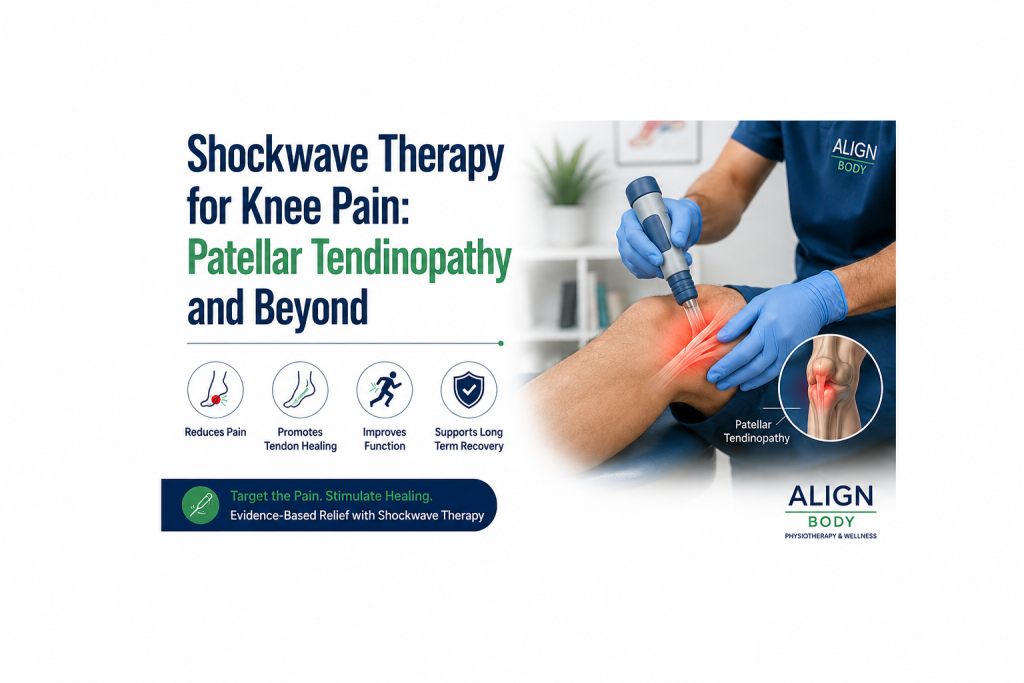
Shockwave therapy is effective for knee pain caused by patellar tendinopathy (jumper’s knee) and Osgood-Schlatter disease. Evidence from multiple studies shows significant pain reduction and improved function after three to five sessions. It is most effective combined with progressive tendon loading exercises rather than used alone.
Knee pain has many possible causes and shockwave therapy is not appropriate for all of them. But for specific tendon-related causes of knee pain, particularly patellar tendinopathy, it is one of the strongest evidence-based interventions available outside of surgery.
This guide explains which knee conditions respond to shockwave therapy, what the evidence shows and what to expect from treatment.
Which Knee Conditions Does Shockwave Therapy Treat?
Patellar Tendinopathy (Jumper’s Knee)
Patellar tendinopathy is a chronic degenerative condition of the patellar tendon, the tendon that connects the kneecap to the shin bone. It causes pain at the bottom of the kneecap that is worst with jumping, running and squatting. It is common in athletes who perform repeated jumping movements (volleyball, basketball, running) and in people who stand for long hours.
Shockwave therapy for patellar tendinopathy stimulates healing in the degenerated tendon tissue, increases local circulation and breaks down abnormal blood vessel ingrowth that is associated with chronic tendon pain. Multiple randomised controlled trials confirm significant improvement in pain and function after shockwave therapy for patellar tendinopathy.
Quadriceps Tendinopathy
The quadriceps tendon attaches at the top of the kneecap and can develop the same degenerative changes as the patellar tendon below. Shockwave therapy works through the same mechanism for quadriceps tendinopathy and has similar evidence of effectiveness.
Osgood-Schlatter Disease
Osgood-Schlatter causes pain at the tibial tuberosity (the bony bump below the kneecap) in adolescents. It results from repeated stress at the growth plate. Research shows shockwave therapy reduces pain and promotes healing at the affected site and may accelerate recovery compared to rest alone.
What the Evidence Shows
A 2017 meta-analysis published in the Journal of Orthopaedic Surgery and Research found that shockwave therapy for patellar tendinopathy produced statistically significant improvements in pain and VISA-P scores (a standardised outcome measure for patellar tendinopathy) compared to control interventions. The results were maintained at follow-up periods of three to six months.
How Many Sessions Are Needed for Knee Pain?
Most protocols for patellar tendinopathy use three to five sessions spaced one to two weeks apart. The first session often produces the most noticeable soreness. Improvement typically becomes apparent after the second or third session. Some patients with chronic or severe tendinopathy benefit from additional sessions.
Combining Shockwave Therapy with Tendon Loading
Shockwave therapy alone improves outcomes for patellar tendinopathy. Combined with a progressive tendon loading programme (such as heavy slow resistance training or decline squats), the evidence shows even better results. The shockwave stimulates the tissue healing. The loading exercises build the tendon’s capacity to handle the demands placed on it.
At AlignBody, every patient receiving shockwave therapy for knee tendinopathy is also given a progressive loading programme. Needling without loading only addresses half the problem.
What Shockwave Therapy Cannot Help for Knee Pain
Shockwave therapy is not appropriate for knee pain caused by cartilage damage, osteoarthritis, ligament tears, meniscal injuries or bone pathology. It treats degenerative tendon conditions specifically. An accurate diagnosis before starting shockwave therapy is essential to ensure you are treating the right problem.
If you are unsure whether shockwave therapy is the right approach for you, it helps to understand shockwave therapy vs physiotherapy and how these treatments differ. You can also read more about is shockwave therapy safe before beginning your treatment plan.
For athletes dealing with recurring knee issues, consulting a sports physiotherapist in Delhi can help with both diagnosis and a structured sports injury recovery plan that goes beyond just the knee.
Book Shockwave Therapy for Knee Pain at AlignBody, DelhiEast Delhi: Jagriti Enclave | South Delhi: Vasant Vihar | +91 9310 014 226