Home physiotherapy or clinic visit: how do you decide
✓ Quick Answer
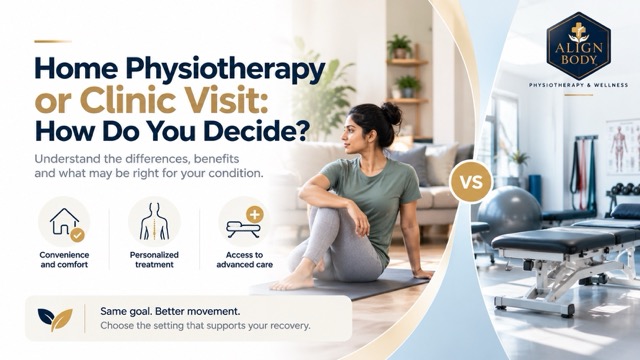
Choose the setting that lets you receive a proper assessment and follow the plan consistently. A home visit may suit someone who cannot travel easily or needs help with everyday movements in their own space. A clinic visit may be better when the assessment or programme needs equipment, a particular treatment space, or close access to the wider team. The setting can change as your needs change.
The right place for a first physiotherapy appointment depends on what you need assessed and what will help you follow the plan. Travel, everyday movement, equipment, and follow-up all matter when choosing between a home visit and a clinic visit.
Clinician Profile
Dr. Richa Gupta
Read about the physiotherapist and AlignBody before choosing an appointment.
Home or Clinic?
Tell the team your location, mobility needs, and main symptoms so they can advise which appointment to book first.
When a home visit may make sense
Travel can be a real barrier during a painful flare, after an operation, or when balance and mobility are limited. A home visit may also let the physiotherapist observe the stairs, chair, work area, or daily tasks that matter to you. The NHS physiotherapy overview notes that a physiotherapist may visit at home when a condition makes it difficult to reach a clinic or hospital.
A home visit may help when…
Travel is difficult
A painful flare, surgery, or limited balance and mobility makes reaching a clinic harder.
Daily tasks matter
The physiotherapist can observe movement around your own stairs, chair, or work area.
Confirm the details
Ask about address coverage, appointment details, and what can be assessed at home.
Ask what the first home visit includes, what portable equipment the clinician will bring, and whether another person should be present. AlignBody describes a physiotherapy at home service. Confirm your address is covered and the appointment details with the team before booking.
When a clinic visit may make sense
A clinic may offer more room and equipment for testing movement, strength, and progress. It can also be easier to move between a one-to-one appointment and a supervised exercise programme. The specific benefit depends on what your clinician plans to assess and what the clinic actually has available; a clinic visit is not inherently better for every condition.
A clinic visit may help when…
More room or equipment
The planned assessment or programme needs space or equipment available at the clinic.
Supervised exercise
A one-to-one visit may lead into a supervised programme.
Confirm the location
Ask which Delhi clinic and clinician are right for your appointment.
AlignBody has an East Delhi clinic in Jagriti Enclave and a South Delhi clinic in Vasant Vihar. The contact page has current booking details and addresses. Confirm the chosen location and clinician when you book.
What should be the same in either setting?
The first visit should still cover your symptoms, medical history, goals, and any warning signs. The physiotherapist may examine movement, strength, balance, or function and explain a plan you can follow. The NHS description of a physiotherapy appointment and APTA initial examination standard both place assessment before a treatment plan. If home travel limits a particular test or intervention, ask whether a later clinic visit would help.
In either setting, expect a plan built from…
1 · History and goals: your symptoms, medical history, daily activities, and what you want to improve.
2 · Relevant checks: movement, strength, balance, or function where appropriate.
3 · A usable plan: what to do between visits, when to follow up, and how to report worsening symptoms.
A good plan also includes what to do between sessions. Home exercises, follow-up timing, and a way to report worsening symptoms matter in both settings. If the first setting stops meeting your needs, ask to switch. This is a care decision made with your clinician, not a permanent choice made at booking.
Four questions to ask when you book
Ask the team
Can the team assess my current problem at home, or is a clinic visit recommended for the first appointment?
Which areas are covered for home visits, and are there any additional visit charges?
Will the appointment include an exercise plan and a way to review progress?
If my needs change, can I move between home and clinic sessions?
When neither routine option is appropriate
Sudden or worsening weakness, new bladder or bowel problems, numbness around the genitals or bottom, or symptoms after a serious accident need urgent medical assessment. Do not wait for a routine home or clinic physiotherapy appointment. The NHS slipped disc page explains these warning signs.
Seek urgent medical assessment instead
Sudden or worsening weakness
New bladder or bowel problems
Numbness around the genitals or bottom
Symptoms after a serious accident
Questions patients often ask
Can the first assessment happen at home?
It may be possible, depending on the problem, address, and clinician availability. Ask the team what can be assessed and whether a clinic follow-up may be useful.
Will home physiotherapy be as effective as clinic care?
There is no universal answer. The quality of the assessment, suitability of the plan, follow-through, and access to needed equipment matter more than the address alone. Discuss your goals with the physiotherapist.
Can I start at home and continue at the clinic?
Often a plan can be adjusted as travel and movement become easier. Ask AlignBody to confirm what is available for your condition and location.
If you are deciding between the two, contact AlignBody with your location, mobility needs, and main symptoms. The team can advise which appointment to book first.