Lumbar Spondylosis: Symptoms, Exercises & Treatment
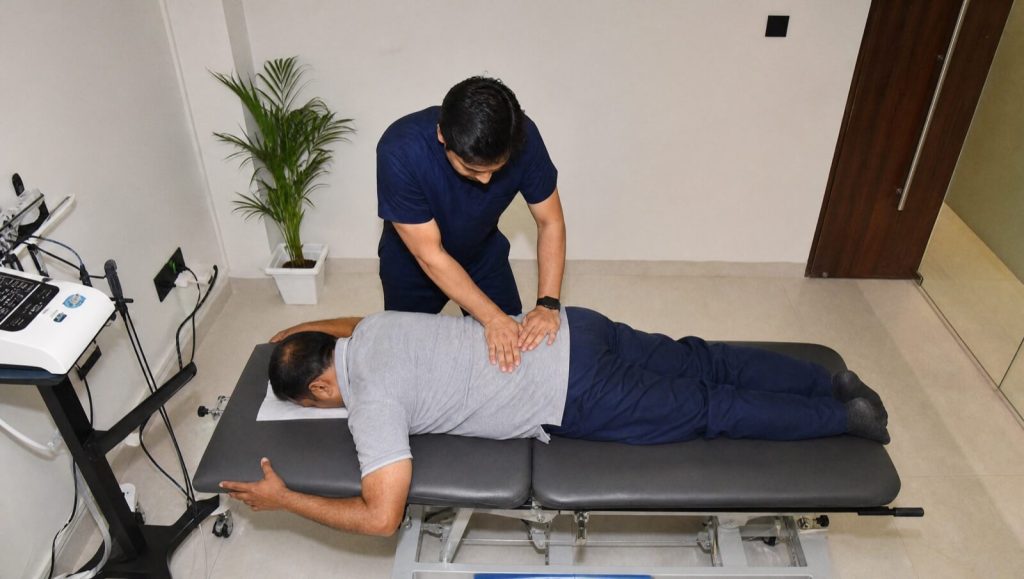
Lumbar spondylosis is age-related wear in the lower spine: the discs lose height and water, and the small facet joints behind them thicken and form bony spurs. Almost every adult over 50 shows some of it on an X-ray or MRI, and many of them have no pain at all. When it does cause symptoms, the usual pattern is lower back stiffness that is worst first thing in the morning and eases once you start moving. Most people improve with exercise, activity and physiotherapy. Surgery is needed only rarely.
Quick answer: what to do about lumbar spondylosis
If you have: Morning stiffness that eases in 30 minutes
What it usually means: Typical lumbar spondylosis
What helps: Daily movement, a graded exercise plan, heat before activity
If you have: Back pain after long sitting or standing
What it usually means: Joints and muscles that are deconditioned, not damaged
What helps: Position changes every 30 to 45 minutes, strengthening
If you have: Pain, tingling or numbness down one leg
What it usually means: A nerve root may be irritated (sciatica)
What helps: Physiotherapy assessment to find which positions ease it
If you have: Leg pain when walking that eases when you sit or bend forward
What it usually means: Possible lumbar spinal stenosis
What helps: Assessment, flexion-based exercise, walking intervals
If you have: Bladder or bowel change, saddle numbness, worsening leg weakness
What it usually means: Possible nerve compression emergency
What helps: Go to emergency care the same day
What lumbar spondylosis actually is
Your lower back has five vertebrae (L1 to L5). Between each pair sits a disc, and behind each disc are two small facet joints. With age, three things happen together:
- The discs dry out and lose height. This is called disc degeneration. A disc bulge often goes with it.
- The facet joints develop arthritis. Their cartilage thins and the joint edges thicken.
- Bony spurs (osteophytes) form at the edges of the vertebrae as the body tries to stabilise the segment.
Together these changes are called spondylosis. The same process in the neck is cervical spondylosis. The most commonly affected levels in the lower back are L4-L5 and L5-S1, which also carry the most load. If your report mentions an L4-L5 bulge as well, our L4-L5 disc bulge guide covers that part.
Does a scan finding mean it is the cause of your pain?
Not necessarily, and this matters. Spondylosis changes are extremely common on scans of people with no back pain at all, so finding them on your MRI does not prove they are causing your symptoms. This is why NICE guidance on low back pain and sciatica advises against routine imaging in a non-specialist setting unless the result is likely to change management.
The words on a radiology report, such as “degenerative”, “desiccation” or “osteophytes”, sound alarming but are normally age-appropriate findings. Your symptoms, your movement and your function guide treatment, not the scan alone.
Symptoms of lumbar spondylosis
- Dull, aching pain across the lower back, sometimes into the buttocks
- Stiffness on waking or after sitting, which eases once you move
- Pain that worsens with long standing, bending backwards or twisting
- Reduced flexibility, especially when bending to put on shoes or socks
- Sometimes pain, tingling or numbness travelling into one leg if a nerve root is irritated (see our sciatica treatment guide)
- Sometimes heavy, aching legs on walking that ease on sitting, which suggests narrowing of the spinal canal (stenosis)
Lumbar spondylosis treatment: what works
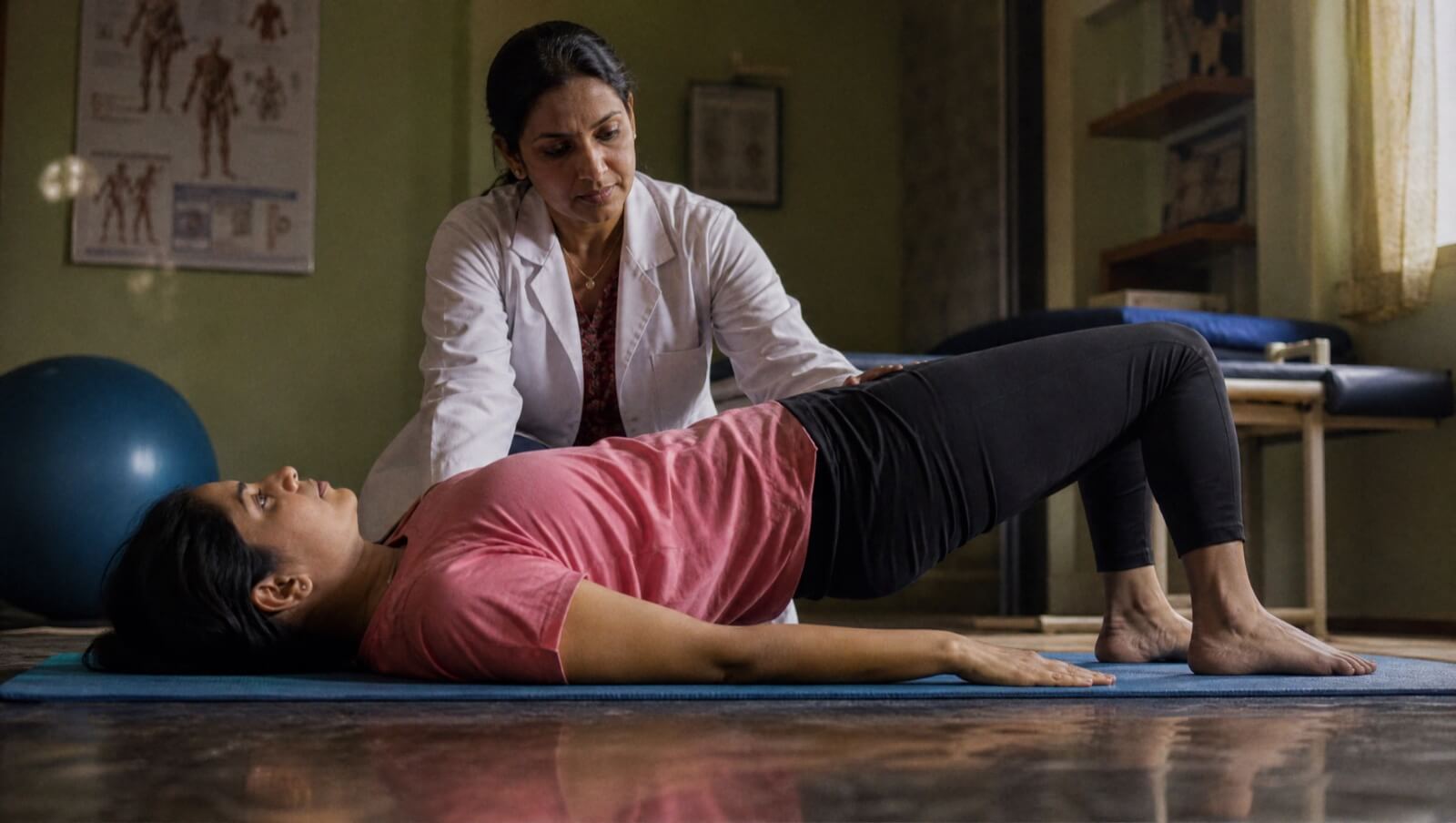
1. Exercise is the main treatment
Exercise has the strongest evidence of any non-surgical treatment for long-term lower back pain. The Cochrane review Exercise therapy for chronic low back pain (Hayden et al., 2021) found that exercise probably reduces pain compared with no treatment, usual care or placebo. The WHO guideline on chronic low back pain (2023) also recommends structured exercise programmes.
No single exercise type has been shown to be clearly better than the others. The best programme is the one you will actually do, matched to what your back tolerates.
2. Manual therapy, alongside exercise
Mobilisation, manipulation and soft tissue work can reduce pain and stiffness in the short term and make exercise easier. NICE recommends manual therapy only as part of a package that includes exercise, never on its own. At AlignBody this is where chiropractic care, dry needling and myofascial release fit in: to calm pain enough for you to train.
3. Staying active
Bed rest makes spondylosis stiffness worse. Keep walking, keep working where you can, and break up long periods of sitting. Pain during activity is not a sign of damage as long as it settles within a day.
4. Pain relief
Heat before activity helps stiffness. Medicines should be discussed with your doctor. Painkillers are a short-term bridge to movement, not a long-term plan.
5. Surgery
Surgery is considered when there is progressive nerve weakness, severe stenosis that limits walking despite good conservative care, or a medical emergency. It is not a treatment for spondylosis changes seen on a scan.
Lumbar spondylosis exercises to start with
These are gentle starting exercises. Move within a comfortable range. Mild discomfort that settles within a few minutes is fine. Pain that spreads further down the leg is a signal to stop and get assessed.
Knee to chest
How: On your back, bring one knee towards your chest, hold, swap sides
Dose: 5 each side, hold 10 to 15 seconds
Pelvic tilt
How: On your back, knees bent, flatten your lower back into the floor, then release
Dose: 10 to 15 slow repetitions
Cat-camel
How: On hands and knees, slowly round then gently arch your back
Dose: 10 repetitions
Bridge
How: On your back, knees bent, lift your hips until your body is in a line
Dose: 10 repetitions, 2 sets
Bird dog
How: On hands and knees, reach one arm and the opposite leg out, hold, swap
Dose: 8 each side, hold 5 seconds
Walking
How: At a comfortable pace. If leg pain builds, sit or lean forward briefly, then continue
Dose: Build towards 20 to 30 minutes a day
If you have stenosis symptoms (leg pain on walking that eases when you sit), forward-bending exercises such as knee to chest usually feel better than backward bending. If bending forward makes leg pain worse, which is more typical of a disc problem, see our disc bulge exercise guide before continuing.
Lumbar spondylosis exercises to avoid early on
- Heavy lifting with a rounded back, until strength and control have built up
- Repeated deep backward bends if they increase leg symptoms
- High-impact running or jumping during a flare
- Sit-ups and full crunches. Bridges and bird dogs train the same muscles with less spinal load
“Avoid” means for now, not for ever. A good programme gradually reintroduces lifting and bending so the back becomes more robust rather than more protected.
Can lumbar spondylosis be reversed?
The structural changes are not reversed, just as grey hair does not turn dark again. Pain and function can improve a lot, though, and often do. Many people with clear spondylosis on a scan are pain-free once their strength, flexibility and activity levels improve. The aim of treatment is a back that works well, not a scan that looks younger.
When to see a physiotherapist
- Pain has lasted more than 2 to 3 weeks or keeps coming back
- Pain, tingling or numbness is travelling into a leg
- Walking distance is reducing because of leg pain
- You have a scan report and are unsure what it means for you
Go to emergency care straight away if back pain comes with loss of bladder or bowel control, numbness around the groin or buttocks, or leg weakness that is getting worse.
Frequently asked questions
What is lumbar spondylosis in simple words?
It is age-related wear in the lower back. The discs lose height and the joints behind them develop arthritis and small bony spurs. It is very common, and many people who have it on a scan have no pain.
What is the best treatment for lumbar spondylosis?
A graded exercise programme, staying active, and short-term pain relief or manual therapy where needed to make exercise possible. NICE and WHO guidelines both put exercise at the centre of care. Surgery is reserved for nerve compression that is progressive or severe.
Is walking good for lumbar spondylosis?
Yes. Walking is one of the best everyday activities for it. If leg pain builds while walking, a short rest sitting or leaning forward usually eases it, and walking intervals can be built up over a few weeks.
Can lumbar spondylosis cause leg pain?
Yes, when bony spurs or a disc bulge irritate a nerve root (sciatica), or when the spinal canal narrows (stenosis). Leg symptoms with numbness or weakness should be assessed by a physiotherapist or doctor.
Is lumbar spondylosis the same as a slipped disc?
No. A slipped or herniated disc is a specific disc injury that can happen at any age. Spondylosis is the broader wear of discs and joints over time. The two often appear together on scans of the lower back. Our herniated disc guide covers that condition.
How long does lumbar spondylosis take to improve?
Most flares settle over a few weeks with activity and exercise. Building lasting strength and flexibility usually takes 6 to 12 weeks of consistent exercise. The scan changes stay, but symptoms often do not.
Get assessed, not just scanned
A scan shows what your spine looks like. An assessment shows what it can do, what it tolerates and what will help. That is what your treatment plan should be built on.
Book at our Jagriti Enclave clinic in East Delhi or our South Delhi clinic in Vasant Vihar, see our disc bulge and back pain physiotherapy, or contact AlignBody to ask which is closer to you.
Reviewed by Dr. Richa Gupta, Physiotherapist, AlignBody. This article is general information and does not replace individual clinical assessment. If you have numbness around the groin or buttocks, loss of bladder or bowel control, or worsening leg weakness, seek emergency medical care.