What does the evidence say about Pilates and back pain?
✓ Quick Answer
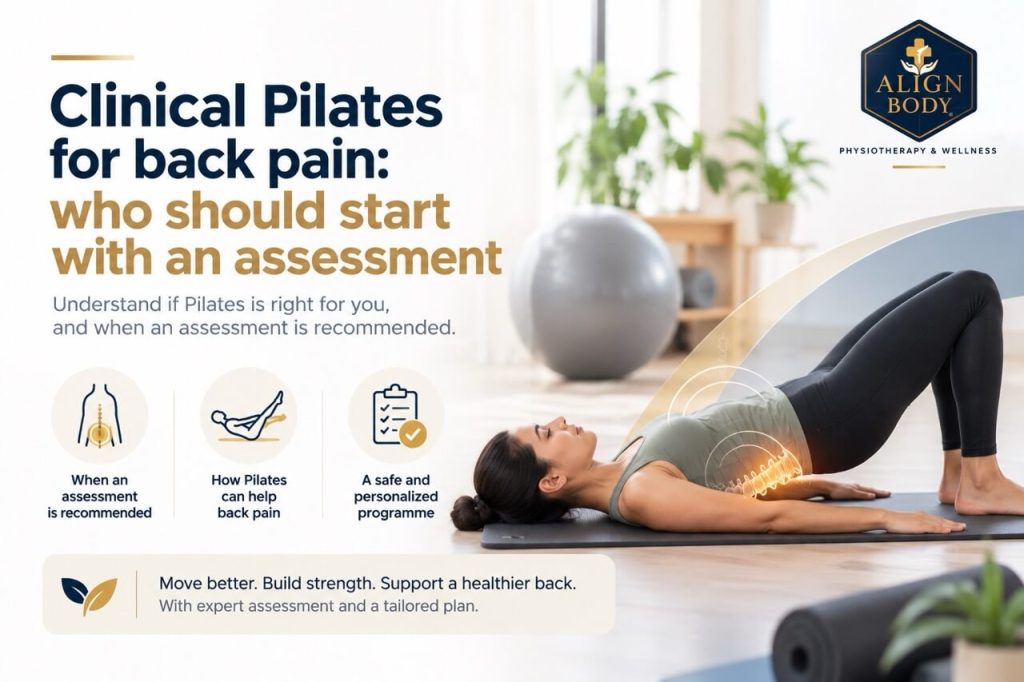
Pilates can be one useful way to exercise with persistent, non-specific low back pain. An assessment is sensible before starting if pain is new or worsening, travels into a leg, comes with numbness or weakness, follows surgery, or is limiting everyday activity. The best programme depends on your symptoms, goals, and response to movement; Pilates is not automatically better than other exercise.
If back pain has made you unsure about joining a Pilates class, an assessment can help you choose a suitable starting point. It looks at your symptoms and goals so that exercise can be adjusted to what you can do now.
Clinician Profile
Dr. Richa Gupta
Learn about the physiotherapist and AlignBody before booking.
Discuss Your Starting Point
Ask the East Delhi team whether an assessment should come before a Pilates session.
What does the evidence say about Pilates and back pain?
Exercise is an important part of care for many people with low back pain. A Cochrane review of Pilates found that Pilates may improve pain and disability compared with minimal intervention, but it did not find conclusive evidence that Pilates is superior to other forms of exercise. A 2023 review of 11 randomised trials likewise found no strong basis for choosing one exercise type over another for chronic non-specific low back pain. That means the useful question is whether the programme fits you and helps you participate consistently, not whether its label promises a special result.
What the evidence means for your choice
Pilates can help
It may improve pain and disability compared with minimal intervention.
No clear winner
Research has not established that Pilates is better than other exercise.
Fit matters
Choose a programme that suits your symptoms, goals, and ability to keep practising.
The WHO guideline for chronic primary low back pain supports structured exercise as one part of person-centred care. These findings do not mean every person with a diagnosed disc problem should join a class without assessment.
How is a tailored programme different from a general class?
A general Pilates class usually follows a shared sequence. In a physiotherapy-led or clinically tailored programme, the starting movements, range, pace, and progression can be adjusted to your symptoms and goals. “Clinical Pilates” is a descriptive term rather than a guarantee that every provider uses the same method. Ask who assesses you, what qualifications they hold, and how they modify exercises when symptoms change.
What tailoring can change
Starting movements
Choose what is manageable now.
Range and pace
Adjust how far and how quickly you move.
Progression
Change the programme as your response changes.
At AlignBody, the Pilates service page describes individual tailoring and supervised sessions. For related background, read the back pain guide and core strengthening guide. An assessment can help you choose exercises that fit your current symptoms instead of relying on a general list.
Who should book an assessment first?
An assessment is sensible when…
People with pain spreading below the knee, new numbness, tingling, or weakness; symptoms need a clinical history and examination before choosing exercise.
People whose pain is worsening, repeatedly flares after exercise, or prevents sleep or normal activities.
People returning after surgery, a significant injury, or a prolonged period of inactivity, who may need a modified starting point.
People who are unsure whether a scan finding explains their symptoms; the plan should reflect what they can do now, not just a scan label.
New bladder or bowel problems, numbness around the genitals or bottom, or rapidly worsening leg weakness require urgent medical assessment rather than a Pilates booking. See the NHS warning signs.
Seek urgent medical assessment
New bladder or bowel problems
Numbness around the genitals or bottom
Rapidly worsening leg weakness
What might a first programme include?
A physiotherapist may first ask which movements feel manageable, then select a small number of exercises that you can perform with control. Progress can involve more range, resistance, or endurance as tolerated. The programme should make room for other activities you value, such as walking or strengthening. If an exercise makes leg symptoms worse or creates new symptoms, stop and ask for reassessment rather than forcing the full class sequence.
A sensible starting conversation covers your goal, the number of supervised sessions that may be useful, what to practise between visits, and how improvement will be measured. You should be able to describe the plan in plain words when you leave.
Common questions about Pilates for back pain
Is Pilates safe if an MRI shows a disc bulge?
A scan result alone cannot answer that. The physiotherapist should consider symptoms, strength, movement tolerance, and any warning signs before advising on exercises.
Is Pilates better than regular strengthening?
The research has not shown a clear advantage over other exercise approaches. Choose a supervised plan you can do consistently and adapt when needed.
How quickly should I expect results?
There is no reliable timetable for an individual. Ask the clinician which changes in pain, function, and confidence you will track, and when the plan should be reviewed.
To discuss an appropriate starting point in East Delhi, explore AlignBody’s Pilates service or contact the clinic. You can also read about Dr Richa Gupta before booking.