Dry Needling for Plantar Fasciitis and Heel Pain: Does It Work?
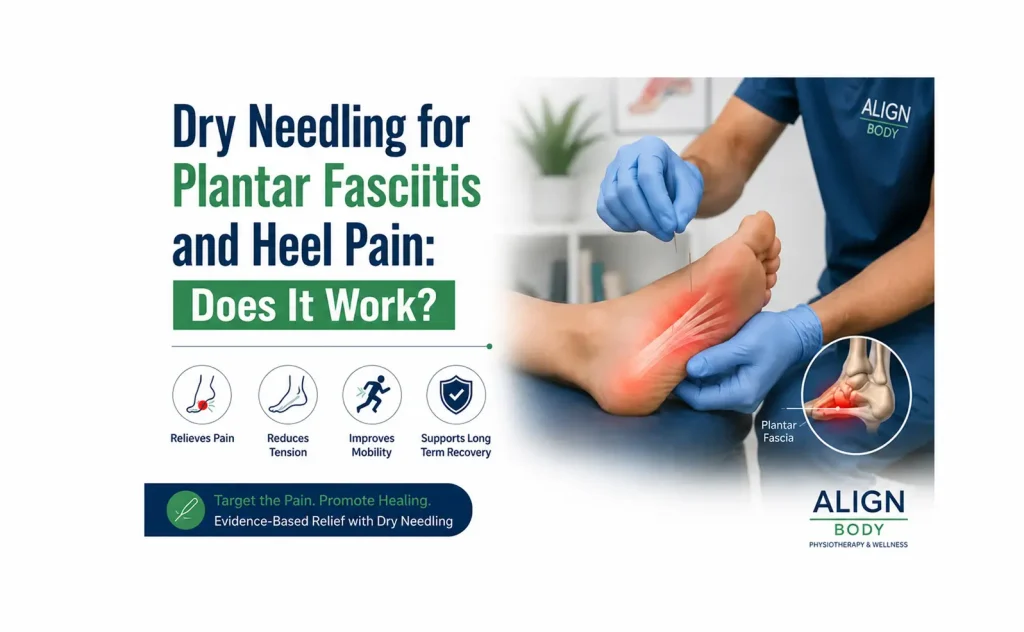
Dry needling is effective for plantar fasciitis, particularly for cases where tight calf muscles and intrinsic foot muscles are contributing to the fascial loading. It reduces the trigger point tension in the gastrocnemius, soleus and intrinsic foot muscles that pull on the plantar fascia. Clinical studies show significant pain reduction with dry needling combined with stretching and loading exercises.
Plantar fasciitis is one of the most stubborn conditions in physiotherapy. For most patients, targeted stretching and loading exercises eventually resolve it. But for a significant number of patients, particularly those with longstanding cases or significant calf muscle involvement, additional interventions are needed.
Dry needling is increasingly used for plantar fasciitis, and the evidence and clinical outcomes are positive. This guide explains how dry needling works for heel pain, what to expect from treatment and how it fits into a broader management plan.
The Connection Between Tight Calf Muscles and Plantar Fasciitis
The plantar fascia does not exist in isolation. Its biomechanical load is closely connected to the calf muscles (gastrocnemius and soleus) which attach through the Achilles tendon above the heel. When the calf muscles are tight, shortened or contain active trigger points, they increase the pulling force on the plantar fascia during walking and running.
The short intrinsic muscles of the foot (particularly abductor hallucis and flexor digitorum brevis) also attach to or run alongside the plantar fascia and can contain trigger points that directly refer pain to the heel.
Dry needling targets trigger points in exactly these muscles. By releasing the tension in the calf and intrinsic foot muscles, it reduces the load on the plantar fascia and allows the tissue to heal.
What the Evidence Says About Dry Needling for Plantar Fasciitis
A 2016 randomised controlled trial published in the Journal of Foot and Ankle Surgery found that dry needling of the gastrocnemius and soleus combined with stretching produced significantly better pain reduction than stretching alone. A 2021 systematic review found dry needling superior to sham needling for both pain and function in plantar fasciitis patients.
The evidence is not as strong as for shockwave therapy in terms of volume of studies but what exists consistently shows positive outcomes when dry needling is combined with an active rehabilitation programme.
Where Does the Needle Go for Plantar Fasciitis?
For plantar fasciitis, dry needling targets trigger points in several locations depending on your individual assessment:
- Gastrocnemius (calf): the most commonly needled area for plantar fasciitis. Trigger points here refer pain to the arch and heel and increase plantar fascial load
- Soleus: sits beneath the gastrocnemius and also attaches into the Achilles tendon. Trigger points here often contribute to heel pain that is worse after prolonged sitting
- Abductor hallucis: the muscle running along the inner border of the foot. Trigger points here directly contribute to arch and heel pain
- The plantar fascia insertion itself: some practitioners needle directly at the fascial attachment at the heel, though this is more commonly associated with shockwave therapy protocols
Dry Needling vs Shockwave Therapy for Plantar Fasciitis
Both have a role in plantar fasciitis management and they work through different mechanisms. Shockwave therapy targets the degenerated fascial tissue directly and stimulates tissue remodelling. Dry needling targets the muscular trigger points that are loading the fascia and increasing its stress.
For many patients at AlignBody, the most effective approach combines both: dry needling to address the muscular component and shockwave therapy to treat the fascial degeneration. This is particularly effective for chronic cases that have not responded to either intervention alone.
What to Expect from Dry Needling for Plantar Fasciitis
Most patients receive three to six dry needling sessions for plantar fasciitis, spaced one to two weeks apart. Each session focuses on the trigger points identified in your assessment that are most significantly loading the fascia.
Post-treatment soreness in the calf is common and expected for 24 to 48 hours. Temporary increase in heel pain can also occur in the first session as the tissues respond. Most patients notice improvement beginning after the second or third session.
Combining Dry Needling with Other Plantar Fasciitis Treatments
Dry needling is most effective as part of a comprehensive treatment programme that includes calf and plantar fascia stretching, gradual heel-raise loading to strengthen the calf and fascia, footwear assessment and insole prescription where appropriate and activity modification during the acute phase.
At AlignBody, no patient receives dry needling for plantar fasciitis without a full assessment that identifies all the contributing factors. The needle treats the trigger points. The exercise programme addresses the loading mechanics that caused those trigger points to develop.
Book Dry Needling for Heel Pain at AlignBody, DelhiEast Delhi: Jagriti Enclave | South Delhi: Vasant Vihar | +91 9310 014 226