Disc Bulge Treatment in Delhi: What Physiotherapy Can Do for You
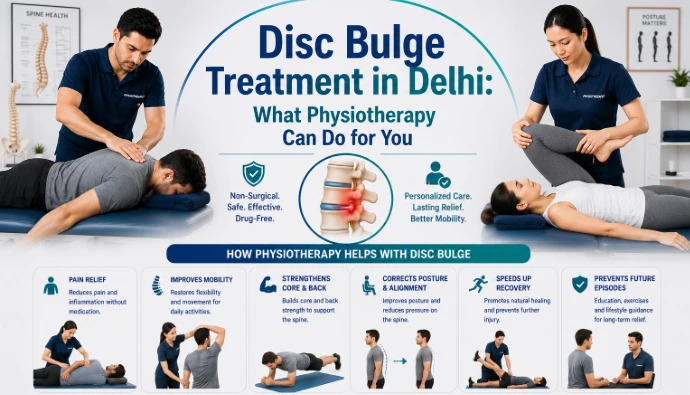
Disc bulge treatment in Delhi through physiotherapy includes McKenzie method exercises, manual therapy, dry needling and spinal traction. Most patients with a disc bulge recover fully in six to twelve weeks without surgery. The key is starting the right treatment early rather than waiting for symptoms to worsen.
A disc bulge is one of the most common reasons people seek physiotherapy in Delhi. The combination of desk work, long commutes and a lifestyle that involves a lot of sitting creates the exact loading pattern that leads to disc problems. When the pain becomes bad enough to stop you working or sleeping properly, the question is what can actually be done about it.
This guide explains exactly what disc bulge treatment in Delhi involves, what to expect from physiotherapy and how long recovery takes.
Understanding Disc Bulge: What Is Actually Happening in Your Spine?
Between each pair of vertebrae in your spine is a disc. This disc has a tough outer ring and a soft gel-like centre. Daily activities like sitting, bending and lifting create pressure inside the disc. Over time, particularly with sustained poor posture or repeated mechanical stress, the outer ring can weaken and the inner material can push outward. This is a disc bulge.
If the bulge pushes far enough to press on a nerve root exiting the spinal canal, you get radiating pain. In the lower back this travels down the leg as sciatica. In the neck it travels down the arm. The type and distribution of symptoms tells a physiotherapist which disc level is affected and how to treat it. Poor sitting habits and prolonged desk work are often the root cause – something our guide on why lower back pain hurts explains in depth.
Physiotherapy Treatment for Disc Bulge in Delhi
McKenzie Assessment and Exercise Therapy
The McKenzie method is the gold standard for disc-related pain. It is not simply a set of exercises. It starts with a systematic assessment that identifies your directional preference. This is the specific direction of movement that reduces your pain and centralises your symptoms.
For most posterior disc bulges (the most common type), this directional preference is extension. Lying face down and gently pressing up into extension reduces pressure on the affected disc and encourages the disc material to move away from the nerve. Once your direction is identified, your entire exercise programme is built around it. Pairing McKenzie work with core strengthening exercises for back pain gives the spine the muscular support it needs during recovery.
Manual Therapy
Manual therapy techniques reduce pain, improve joint mobility and address the significant muscle spasm that develops around a disc injury. The paraspinal muscles lock down around an injured disc as a protective reflex. While this is initially helpful, sustained muscle guarding compresses the spine further and prolongs recovery. Manual therapy breaks this cycle. For a wider picture of how this fits into back care, our post on physiotherapy treatment for back pain relief is worth reading alongside your treatment.
Dry Needling for Disc-Related Muscle Spasm
Dry needling targets the trigger points in the muscles surrounding the affected disc. These trigger points can be extremely painful and significantly limit your range of motion. Releasing them provides immediate pain relief and allows you to engage more fully with your exercise programme. If you have questions before your first session, our guides on what dry needling treatment involves and whether dry needling is safe cover everything you need to know. For disc-related nerve pain specifically, dry needling for back, neck, sciatica and SI joint pain explains which conditions respond best.
Traction Therapy
Mechanical traction is used selectively for patients with significant nerve root compression. It applies a sustained or intermittent distraction force to the spine that temporarily increases the space between vertebrae and reduces pressure on the compressed nerve. At AlignBody, traction is used as part of a broader treatment plan rather than as a standalone treatment.
Postural Correction and Ergonomic Advice
Identifying and correcting the postural habits and work setup that caused the disc problem in the first place is essential for long-term recovery. Without addressing the underlying cause, disc symptoms tend to recur. At AlignBody, every patient with a disc problem receives specific advice about sitting posture, workstation setup and activity modification. Our posture correction physiotherapy programme in Delhi can run alongside disc treatment, and our list of the best posture correction exercises for men and women gives you practical movements to start at home right away.
How Long Does Disc Bulge Treatment Take in Delhi?
Recovery time depends on the severity of the bulge, whether nerve symptoms are present and how long the problem has been developing. As a general guide:
- Mild disc bulge with back pain only: four to six weeks
- Moderate bulge with some leg or arm symptoms: six to ten weeks
- Significant nerve compression with radiating pain: ten to sixteen weeks
- Chronic disc problem lasting more than three months: twelve to twenty weeks
These are timelines to significant improvement, not to complete discharge from symptoms. Most patients notice meaningful improvement within the first two to three weeks if treatment is the right type. If neck-related disc symptoms are also present, our post on neck pain and cervical stiffness is a helpful companion read.
Disc Bulge vs Herniated Disc: Is There a Difference?
Yes, though the terms are often used interchangeably in daily conversation. A disc bulge means the outer ring is intact but the disc is pushing outward symmetrically or asymmetrically. A herniated disc (also called a disc prolapse or slipped disc) means the inner material has actually broken through the outer ring. Herniations are generally more severe and take longer to heal. Both are treated with the same physiotherapy approach but the intensity and duration of treatment differs. If your symptoms are in the neck rather than the lower back, our guide on cervical spondylosis covers disc-related issues at that level in detail.
Can a Disc Bulge Cause Permanent Nerve Damage?
In the vast majority of cases, no. Nerve compression from a disc bulge causes inflammation and irritation of the nerve but does not damage it permanently when treated appropriately. Permanent damage is most associated with cauda equina syndrome (a surgical emergency) or with very prolonged severe compression that is left untreated.
If you have a disc bulge with radiating symptoms, the important thing is to start the right treatment early. The longer nerve compression continues, the longer the nerve symptoms take to resolve. If you are unsure whether physiotherapy or an orthopaedic consultation is the right first step, our comparison of physiotherapy versus orthopaedic care helps you decide.
Disc Bulge Treatment at AlignBody, Delhi NCR
AlignBody has two clinic locations in Delhi and home visit physiotherapy for patients who find travel difficult during an acute flare. East Delhi patients are seen at our Jagriti Enclave clinic. South Delhi patients at our Vasant Vihar clinic.
Every disc bulge assessment at AlignBody includes a full clinical history and examination, McKenzie directional preference testing, neural tension testing where relevant and a specific written exercise programme from your first session. Treatment is led by Dr. Richa Gupta, and you do not leave your first appointment without knowing exactly what to do at home. Explore our full range of physiotherapy services or contact us directly to discuss your symptoms before booking.
Book a Disc Bulge Assessment at AlignBodyEast Delhi: Jagriti Enclave | South Delhi: Vasant Vihar | Home Visit Available
Call: +91 9310 014 226