Cupping Therapy for Neck and Shoulder Pain Guide
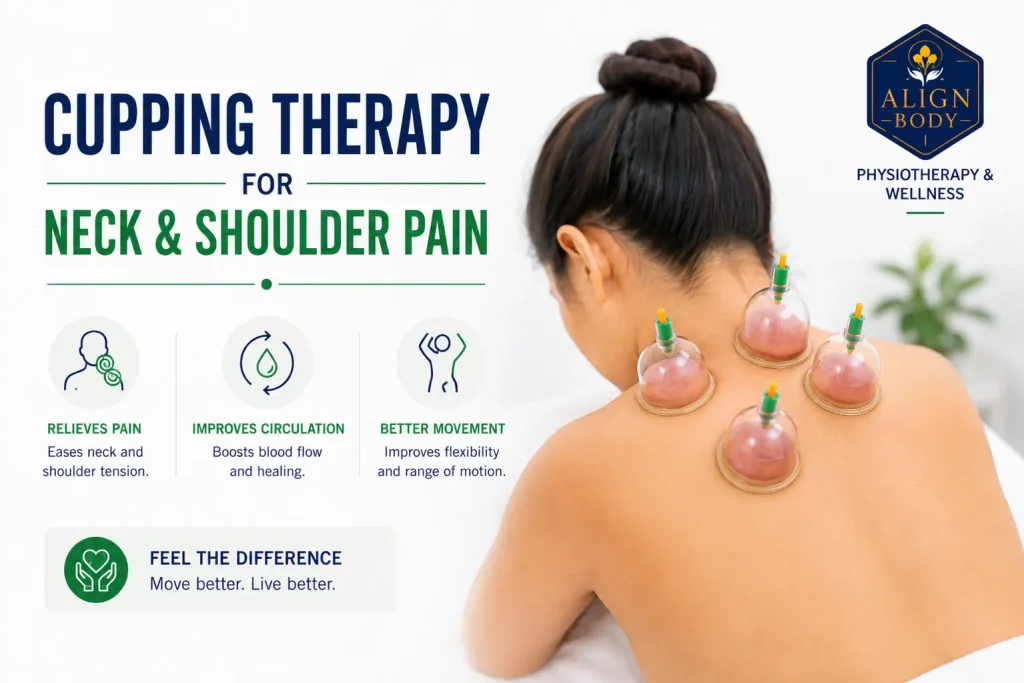
✓ Quick Answer
Cupping therapy for neck and shoulder pain works by releasing myofascial tension, boosting circulation and reducing trigger points in the trapezius, levator scapulae and sternocleidomastoid. Chi et al. 2016 RCT recorded pain drop from Visual Analog Scale (VAS) 8.5 to 2.6 after single sessions.
Every week in our clinic, IT professionals and WFH patients arrive with tech neck, tight trapezius and cervicogenic tension. Neck pain affects 42-63% of office workers annually, especially those with chronic neck pain lasting ≥3 months. Notably, in our clinical experience across Delhi NCR, cupping delivers rapid relief for these presentations shaped by our clinical experience over 10+ years.
Written By
Dr. Richa Gupta
Founder, AlignBody Physiotherapy Clinic. APBC-certified (USA, Thailand). Diploma in Osteopathy (Ontario).
10+ years clinical practice, Delhi NCR
How Cupping Therapy for Neck and Shoulder Pain Works
Firstly, cupping works through negative pressure lifting skin and fascia. Consequently, this improves circulation, reduces myofascial adhesions and releases trigger points. Rooted in Traditional Chinese Medicine (TCM) from 4th century (Ge Hong), plus hijama, Ayurveda and Egyptian traditions.
4 mechanisms for neck and shoulder relief:
Myofascial release: negative pressure lifts fascia and skin.
Increased circulation: capillary vasodilation, lymphatic drainage.
Trigger point release: upper trapezius, levator scapulae knots.
Nervous system: parasympathetic response reduces tension.
Key Benefits of Cupping Therapy for Neck and Shoulder Pain
Notably, benefits appear within 1-3 sessions in our practice. In our clinical experience, cupping addresses root muscular patterns, not just symptoms.
6 key benefits for neck and shoulder:
Rapid pain reduction (single-session VAS drop documented).
Improved range of motion (ROM) in cervical rotation.
Tension headache relief including cervicogenic type.
Better sleep from reduced trapezius tightness.
Postural correction support alongside physiotherapy.
Stress reduction via parasympathetic activation.
What the Evidence Shows for Cupping Therapy on Neck and Shoulder Pain
Overall, four systematic reviews anchor cupping evidence for neck and shoulder pain.
Neck and shoulder cupping evidence:
Chi et al. 2016 RCT: VAS 8.5 to 2.6 (P<0.001, single-blind), 60 subjects.
Kim et al. 2014 (Eur J Integr Med): 135 RCTs, zero serious AEs.
Al-Bedah et al. 2016 (BJMMR): 25 studies confirming musculoskeletal benefits.
Mohamed et al. 2023 (J Back Musculoskelet Rehabil): PRISMA/GRADE framework.
Additionally, the newest meta-analysis (Torad et al. 2026, 9 randomised controlled trials (RCTs), 401 participants, PROSPERO CRD42025633104) recorded Cohen’s d = 1.17 for pain reduction and 0.77 for functional improvement on the Neck Disability Index (NDI), with zero serious adverse events. Endorsement stacks up: the World Health Organization (WHO) recognises cupping, while European clinical practice guidelines and Ontario Protocol position it beside physiotherapy, manual therapy, acupuncture and myofascial release. Furthermore, the Aboushanab & AlSanad 2018 paper (J Acupunct Meridian Stud) supplies the adverse-event classification framework applied globally.
Which Types of Neck and Shoulder Pain Respond Best to Cupping
Neck and shoulder conditions responding best:
Tech neck: forward head posture, tight upper trapezius and levator scapulae.
Trapezius myalgia: chronic tightness from stress or overuse.
Cervicogenic headache: pain originating from cervical spine tension.
Frozen shoulder: adhesive capsulitis (physiotherapy adjunct).
Cervical spondylosis: age-related disc changes with radiating pain.
Rotator cuff strain: supraspinatus and infraspinatus tightness.
When Cupping for Neck and Shoulder Pain Is Not Appropriate
Importantly, at AlignBody we screen every patient before cupping. Cupping near brachial plexus and carotid artery needs expert placement.
Contraindications for neck and shoulder cupping:
Anticoagulants: warfarin, heparin, active bleeding disorders.
Skin conditions: active eczema, cellulitis, herpes zoster.
Cervical instability: recent whiplash, spinal fusion.
Pregnancy, cancer, uncontrolled diabetes need clearance.
Cup Placement Zones for Neck and Shoulder Cupping
At AlignBody we target 4 primary zones. We avoid the anterior neck and carotid triangle for safety.
4 primary cup placement zones:
Upper trapezius: most common, 2-3 cups per side.
Levator scapulae: for cervical rotation restriction.
Suboccipital region: for cervicogenic headaches.
Rhomboid area: for interscapular tension.
Cupping Therapy vs Other Neck and Shoulder Pain Treatments
Typically, cupping works well alongside other therapies. We combine treatments for faster recovery.
Compared to massage, cupping reaches deeper fascia with less effort. Versus dry needling, cupping is non-invasive. Compared to cross-frictional massage (Javaid et al. 2024), myofascial cupping shows equivalent outcomes. Unlike NSAIDs (ibuprofen), cupping addresses root patterns rather than masking pain. In our clinic, we combine cupping with physiotherapy, myofascial release, ergonomic workstation correction and postural retraining for tech neck cases.
How to Prepare and What to Do After Neck and Shoulder Cupping
Firstly, arrive hydrated (2-3 litres water prior 24 hrs) and eat lightly 2-3 hrs before. Wear a loose top with shoulder access. In our clinic, we allow 5-7 days between same-area sessions (British Cupping Society since 2008) and combine cupping with Deep Neck Flexor (DNF) activation and scapula stabilization exercises for lasting results.
✓ 48-hour neck/shoulder aftercare:
✓ DO
Extra hydration 500ml-1L post-session
Gentle neck ROM exercises after 24 hrs
Keep area warm, avoid AC drafts
✗ DON’T
Saunas, hot tubs for 24-48 hrs
Alcohol for 24 hours post-session
Heavy gym loading shoulders 24 hrs
Cupping Therapy for Neck and Shoulder Pain in the Indian Context
Across our Delhi practice, we see four common patient patterns.
4 Delhi neck/shoulder patient patterns:
IT professional (WFH tech neck)
Forward head posture, tight trapezius. Weekly for 6 weeks.
Cervicogenic headache patient
Suboccipital tension, tried NSAIDs. 4-6 session plan.
Weekend cricketer, IPL fan
Shoulder overuse, rotator cuff. Weekly during peak season.
Delhi monsoon patient
Stiffness peaks in winter, bi-weekly maintenance.
Overall, techniques span dry cupping (static cupping, moving cupping, sliding cupping), flash cupping, fire cupping and wet cupping (hijama), plus pulsating cupping (pneumatic pulsation therapy per Cramer et al. 2011). However, most first sessions use dry static cupping with silicone cups (-225 to -300 mmHg, 5-10 min per cup for beginners, up to 8-30 min for chronic conditions per recent reviews, 10-min max first session per StatPearls NIH).
Frequently Asked Questions
Does cupping therapy for neck and shoulder pain hurt?
Typically, cupping does not hurt. Patients describe firm pulling or a firm hug, not pain. We use lighter suction (-225 mmHg) for sensitive neck areas.
What is the cost of cupping for neck and shoulder pain in Delhi?
Generally, cupping in Delhi NCR costs Rs. 800-2,000 per session. At AlignBody, first sessions include consultation and assessment.
How long do cupping marks last on neck and shoulders?
Typically, marks fade in 3-10 days. Marks on thinner neck skin may darken more but fade at the same rate.
When will I notice results from cupping for neck and shoulder pain?
Generally, some notice immediate relief after session 1 (Chi et al. 2016 RCT: VAS 8.5 to 2.6). Most see meaningful improvement by session 2-4.
Can I do cupping at home for neck pain?
No, home cupping for neck is not recommended. Brachial plexus and carotid artery need expert placement to avoid injury.
Can cupping help with cervicogenic headaches?
Yes, cupping on the suboccipital region and upper trapezius reduces cervicogenic headache frequency. We combine cupping with postural retraining for lasting results.
In summary, cupping for neck and shoulder pain delivers rapid myofascial relief with strong safety evidence. Book at our Delhi clinic or South Delhi centre. Related: side effects, first session, frequency guide.